One person's pet in a shared flat: who pays the extra?
A dog or a cat brings costs that don't show up in the flat's rent: an extra deposit, occasional damage, hair on the shared sofa. Splitting it well keeps the pet from becoming the living room's silent conflict.

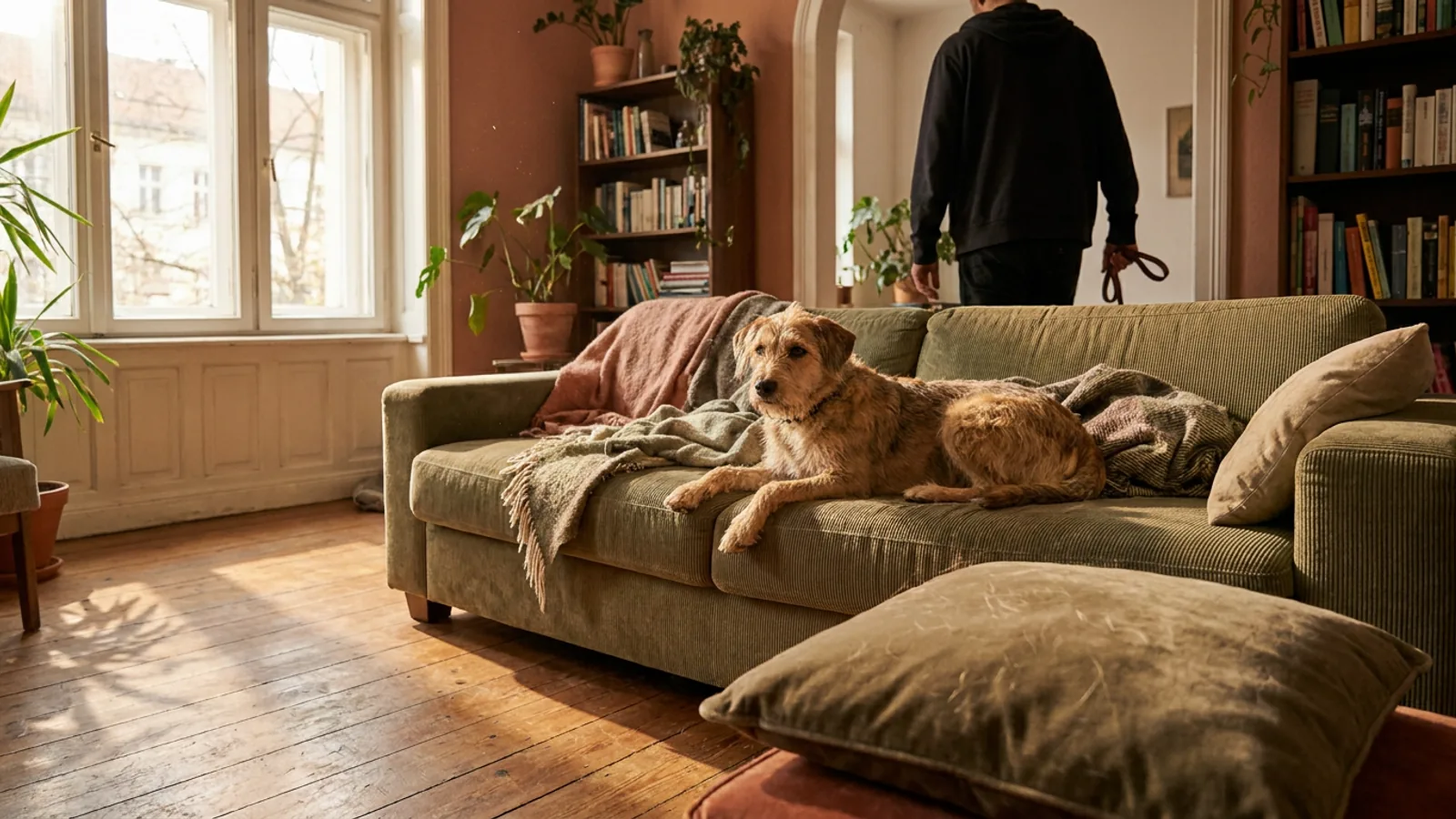
The day the landlord raised the deposit
The conversation usually starts innocently. One of the flatmates has been mulling over the idea of adopting a dog for weeks. They bring it up in the living room, with the casualness of someone who has already decided and is just looking for a nod. The rest react somewhere between gentle enthusiasm and a concrete doubt: where will it sleep, who walks it when someone goes away for the weekend, what about the sofa. Almost nobody, at that moment, says the line that ought to be said: hey, how much does this cost and who pays for what?
Living with animals in a shared flat is no minor matter. In big Spanish cities, renting a four-bedroom flat for under eighteen hundred euros a month is already becoming the exception, and many contracts demand an extra deposit when there's a pet; between one hundred and three hundred euros more, depending on the landlord. Add the clause that appears in bold in the contract (any damage attributable to the pet is borne by the tenant who brought it) and you have the first accounting point almost nobody negotiates in writing before adopting.
And then there's what you don't see: the low hum of the fridge when the dog digs through the bin at night, the hair in the shared washing machine, the smell of the litter tray that reappears after three weeks if it isn't cleaned properly. All of that has a cost, however diffuse.
Why "let the owner pay" falls short
The intuitive answer is fair but incomplete. Yes, the pet's direct costs (food, vet, grooming, toys, third-party liability insurance) belong to the owner and the owner alone. There's no debate there. The problem is that the animal doesn't live in a bubble: it uses the flat's floor, the living-room furniture, the warmth of the communal heating. It generates wear the rest of the flat pays for without having decided to.
On top of that comes an uncomfortable asymmetry. When the owner goes away for the weekend and leaves the dog in the care of the "trusted" flatmate, that eleven-at-night walk enters an accounting nobody has opened. When the sofa has to be replaced because the cat has scratched it for two years, the owner may feel the animal is to blame and not them, but the rest of the flat just sees a useless shared piece of furniture.
The right question isn't "who pays for the dog?". It's "what externalities does the pet generate on the rest of the flat and how do we compensate for them without it being weird to talk about?".
Three models for splitting the extra
1. Monthly pet fee
The cleanest model is a small fixed monthly fee the owner pays into the shared fund, as an "assumed externality". Ten or fifteen euros a month depending on the animal and the size of the flat. It sounds ridiculously little, but over a year it's between one hundred and twenty and one hundred and eighty euros that help absorb the extra wear on the sofa, the vacuum cleaner that breaks down sooner and the specific cleaning products that do get used more than before.
Advantage: predictable, easy to include in the flat's monthly transfer, doesn't generate awkward conversations every time a hair turns up in the kitchen. Drawback: if the animal ends up doing serious damage, that fee doesn't cover it. For that you need the second model.
2. Occasional damage at one hundred percent
Any damage directly attributable to the pet (a bite on a table leg, a torn curtain, a cushion with a hole, the scratched hallway skirting) is paid in full by the owner, no discussion. The rule has to be written down beforehand, not after the first incident.
A realistic example: the flatmate's cat wrecks a roller blind. Replacing it costs around ninety euros between materials and labour. If the model is agreed, the owner takes on the ninety, pays the landlord or the repair service, and the rest of the flat doesn't even find out. If the model isn't agreed, those ninety euros turn into an hour-and-a-half conversation about who had left the blind half down.
3. Extra deposit and professional services
If the landlord demands an additional deposit for the pet, that deposit is exclusively the owner's. It isn't split. Just as the owner bears the insurance's liability cover, the microchip, the vaccines, and the deep clean of the flat at the end of the contract if the landlord deducts it from the big deposit on account of hair or attributable wear.
The only nuance: if at the end of the contract the landlord deducts part of the shared deposit because the laminate floor needs restoring due to claw marks, that specific part is also borne by the owner. The trick here is to document the flat's condition with photos at the start of the contract. Without photos, everything is debatable and the conversation sours.
The cost nobody sees: the time of shared care
There's a cost that isn't monetary and so goes unnoticed. When the owner goes travelling and a flatmate offers to walk the dog three times a day for four days, they're providing a service that on the market would cost twenty or twenty-five euros a day. If they do it gladly and only once a year, no problem. If it happens every couple of months because the owner travels for work, it enters an asymmetry worth compensating.
The elegant solution isn't an hourly rate between friends, but explicit reciprocity. A dinner paid for by the owner, a weekend where the caretaking flatmate picks the film or the destination, a case of beers. The gesture matters more than the amount. What doesn't work is silence: if the caretaking flatmate feels they're giving without receiving, the conflict appears three months later in an argument that seemingly has nothing to do with the dog.
How to settle it without turning it into a spreadsheet
What you need is a system in which the pet fee appears as a recurring expense in the flat, occasional damage is recorded as individual expenses assigned to the owner, and all the flatmates see on the same screen what's being split and what isn't. A tool like ControlarGastos does exactly that: it lets you add a monthly recurrence with the pet fee directed only at the owner, and it splits the cents by largest remainder, not by truncation, so nobody always pays the rounding.
The goal isn't to bureaucratise living together. It's the opposite: that the difficult decisions (how much, who, when) are already made in writing at the start, and that the rest of the year the group can love the dog or the cat without every hair on the sofa triggering mental accounting.
Conclusion: the pet isn't the problem
Pets in a shared flat are almost never the real problem. The problem is the conversation that wasn't had on day one, the one that assumes affection for the animal dissolves the financial question. It doesn't dissolve it; it postpones it. And postponed matters in shared living age badly, especially if they mix with accumulated tiredness and a new sofa that no longer looks so new.
Talking about it before adopting (or before the flatmate adopts) is the most adult thing a flat can do. Not out of distrust, but out of respect for the living together that will come afterwards, the kind that lasts two or three years and runs through house moves, partners coming and going, long weekends and, with luck, a happy dog that sleeps in the living room without generating resentment.
Keep reading

Rounds at the bar with flatmates and friends: a mini-split
The corner bar is the fifth flatmate. How to handle the rounds so nobody ends up paying four times in a row, without turning Friday into a spreadsheet.

Beers at the bar: the phone-calculator ending
Three rounds, eight beers, three plates of patatas bravas, two alcohol-free drinks. The arithmetic at the end can take fifteen minutes or thirty seconds. The difference is in how you model the problem before you order.

Sharing Netflix/Spotify in a flat: the legal grey area
The platforms are tightening their same-household clauses and shared flats live in an increasingly uncomfortable grey area. How to organise the flat's streaming without drama or unexpected cut-offs.
Sound familiar?
ControlarGastos automates splitting expenses with your partner, flatmates and friends. Split to the cent, no arguments.
Start for free