Saunas, Escape Rooms, Karting: "One-Off" Fun Among Friends
Occasional 25-40 euros-a-head outings where one person books and everyone else pays later. A look at the ritual of collecting, the apps, Bizum, and why someone almost always ends up forgetting.


You make the booking, you also get the problem
The flow is always the same. Someone in the group finds an experience: a new escape room, a karting session at a track on the outskirts, a sauna with a treatment included to celebrate something that isn't a birthday. They send it to the chat, there are a couple of "I'm in" within thirty seconds, two people who take a day to reply, and in the end six are on board. The activity costs, say, thirty-five euros a head. You have to book by card, and the platform charges in a single block, two hundred and ten euros, to the first person who hits the button. And there, in that act of hitting the button, begins a chain of friction that repeats every couple of weeks in friend groups all over Spain.
The problem isn't the money. Thirty-five euros among adults with salaries isn't what ruins a friendship. What ruins it, slowly and almost imperceptibly, is the ritual of collecting: the dread of having to remind them, the feeling of asking for what's yours, the awkwardness of the last person to pay because they reckon it doesn't matter anymore. It's a protocol failure, not a generosity failure. And it can be solved with a bit of social engineering.
Why the "you'll get it off us" model breaks down in series
There are three fronts where this model creaks. The first is latency. The person who booked has the charge on their card today, but the rest take between one and fourteen days to send the Bizum, depending on each person's character and how insistent the reminder is. Meanwhile, their balance is two hundred and ten euros lower than it should be, and that, multiplied by two or three bookings in a month, stops being invisible. The second front is coverage: in a group of six, there's almost always one who slips through. Not out of bad faith, simply because the notification got buried and no one followed up. The third is the imbalance of who dares to chase and who doesn't. The introvert of the group, the one who booked once by accident because they got caught off guard, pays the rookie's price in silence.
The sum of these three fronts produces a predictable bias: the group's habitual organiser ends up paying a larger proportion of the expenses than the rest. Not because they're richer, but because they're willing to swallow friction that the others wouldn't. And that, when it drags on for a couple of years, leaves a residue of resentment hard to articulate without sounding petty.
Three collecting formats and which one scales
1. Manual Bizum with a screenshot
The classic method. The person who booked sends to the chat: "booking confirmed, it's thirty-five a head, here's my number". Each one sends their Bizum when they remember, and the organiser ticks them off mentally. In groups of three or four, it works, even if it's lazy. In groups of six or more, it fails. It always fails. The probability that someone won't get round to sending the Bizum is proportional to the size of the group and the time elapsed since the event. Past the first week, reminding them makes you feel like the group nag.
The hidden cost of this model isn't the money lost, it's the mental energy it consumes the organiser. Having one hundred and forty euros outstanding spread across four different Bizums occupies a niche in your head, especially when several activities overlap in the same month. It's a parallel agenda nobody asked for.
2. A shared expense-splitting app
The qualitative leap appears when the group stops managing loose Bizums and starts recording everything in a shared system. The operation is simple: the person who books logs the expense in the app with the total amount and the participants, and the app automatically calculates how much each one owes. The difference from Bizum is that, instead of six loose micro-payments, the debts accumulate and offset: if the following week someone else books the dinner, their expense reduces what they owe to whoever booked the karting. After a month, instead of twenty-four little Bizums, there are three big net settlements, or none if everything offsets.
This is basic process engineering: reduce the number of net transactions to minimise friction and error. In an active group, the difference is brutal. For example, in a group of six with four bookings in the month, the Bizum model generates twenty transactions; the app model, normally between two and four net settlements. The cognitive load collapses.
3. A shared pot with monthly contributions
An interesting variant for very stable groups: each person puts a fixed monthly amount into a group pot, and the bookings come out of there. The advantage is that it eliminates the friction of individual collecting; the drawback is that it requires high trust, someone has to keep the kitty, and the group's actual activity rarely matches the fixed quota. It works in very consolidated crews with a weekly habit; it's overkill for a group of six friends who meet two or three times a month.
The problem of last-minute cancellations
Before closing the matter of collecting, there's a case that deserves separate treatment: the last-minute cancellation. You booked for six, you paid for six, and two hours before the event one of them drops out because something came up. The question is: do they pay their share anyway or not?
The reasonable answer depends on the type of activity. If the booking is non-refundable, as is the case with almost all escape rooms and active leisure experiences, the cost is already spent and one participant cancelling generates no saving for the group. In that case, the one who cancels pays their share anyway. It's the rule of most functional crews and it rests on a simple logic: the cost materialised when the booking was made, not at attendance. If, on the other hand, the activity allows changes or partial refunds, the fair thing is for each person to take on only their real share.
If this isn't agreed at the start, it becomes a second layer of friction every time someone drops out. The efficient thing is for the group to decide it once, leave it in writing in the chat or in the splitting app itself, and apply it automatically from then on.
The problem of the "almost in the group" crowd
There's a variant that apps handle better than Bizum: the person who joins one activity but not the next. In the WhatsApp group there are six regulars, but at the escape room there are five, at the karting there are four because one signed up late and didn't fit, and at the dinner afterwards there are seven because someone's partner came along. Bizum doesn't distinguish: each expense demands its own collection and forces you to remember who was there. A splitting tool does distinguish, because for each expense you select exactly who took part, and the final sum is consistent with reality.
This is what a tool like ControlarGastos does: it lets you build the group once, mark who takes part in each specific expense, and distributes the cents by largest remainder, not by truncation, so that no one always pays the rounding. The difference from a notebook or loose Bizums is that the system does the calculation and the settlement is always consistent.
Conclusion: friction is the real cost
An escape room session doesn't cost thirty-five euros a head, it costs thirty-five euros plus the number of minutes the organiser spends reminding everyone else to pay. In small groups that figure is negligible. In active groups, on the other hand, it becomes an invisible levy that the same person always pays. The reasonable thing is to break that levy with a system, any system, that automates the calculation and eliminates the conversation.
Adult friendships rest on things almost no one puts into words: that the accounts are clear, that no one feels used, that money stops being noise and goes back to being a means to do things together. When you pull that off, plans go back to being plans rather than administrative projects.
Keep reading

Beers at the bar: the phone-calculator ending
Three rounds, eight beers, three plates of patatas bravas, two alcohol-free drinks. The arithmetic at the end can take fifteen minutes or thirty seconds. The difference is in how you model the problem before you order.

Rounds at the bar with flatmates and friends: a mini-split
The corner bar is the fifth flatmate. How to handle the rounds so nobody ends up paying four times in a row, without turning Friday into a spreadsheet.
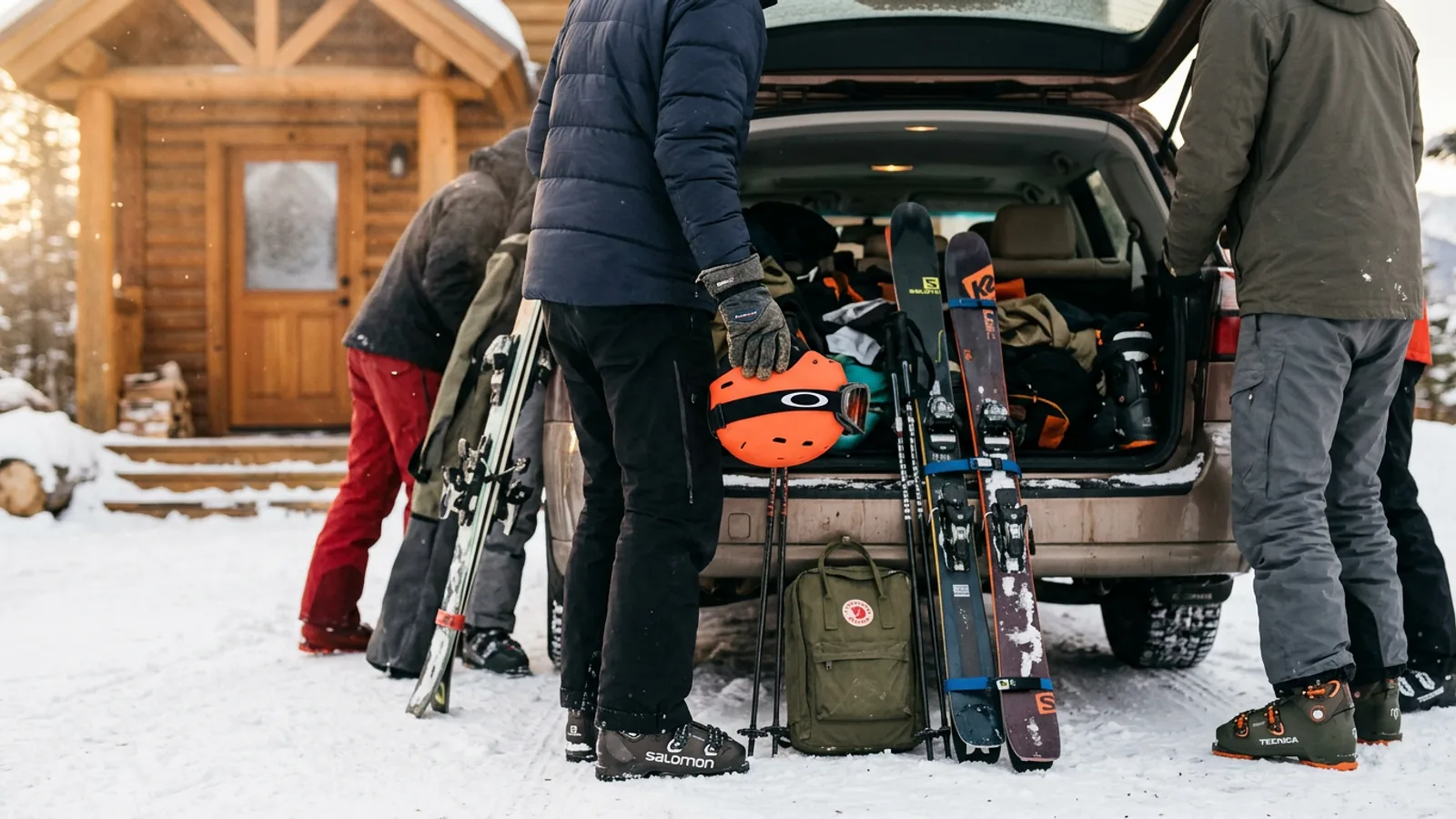
A Group Ski Trip: Lift Pass, Petrol, Accommodation
Lift pass, accommodation and petrol are three axes with different logics. If you put them in the same bucket and divide by six, someone ends up paying for what they didn't use. Here's a scheme to split it well.
Sound familiar?
ControlarGastos automates splitting expenses with your partner, flatmates and friends. Split to the cent, no arguments.
Start for free