The flatmate who comes home late: noise, lights, heating
There's a financial cost to living with someone on a night-owl schedule that almost no one quantifies. Heating at three a.m., lights on all night, a shower at five. When it's fair to renegotiate the flatshare's contribution.

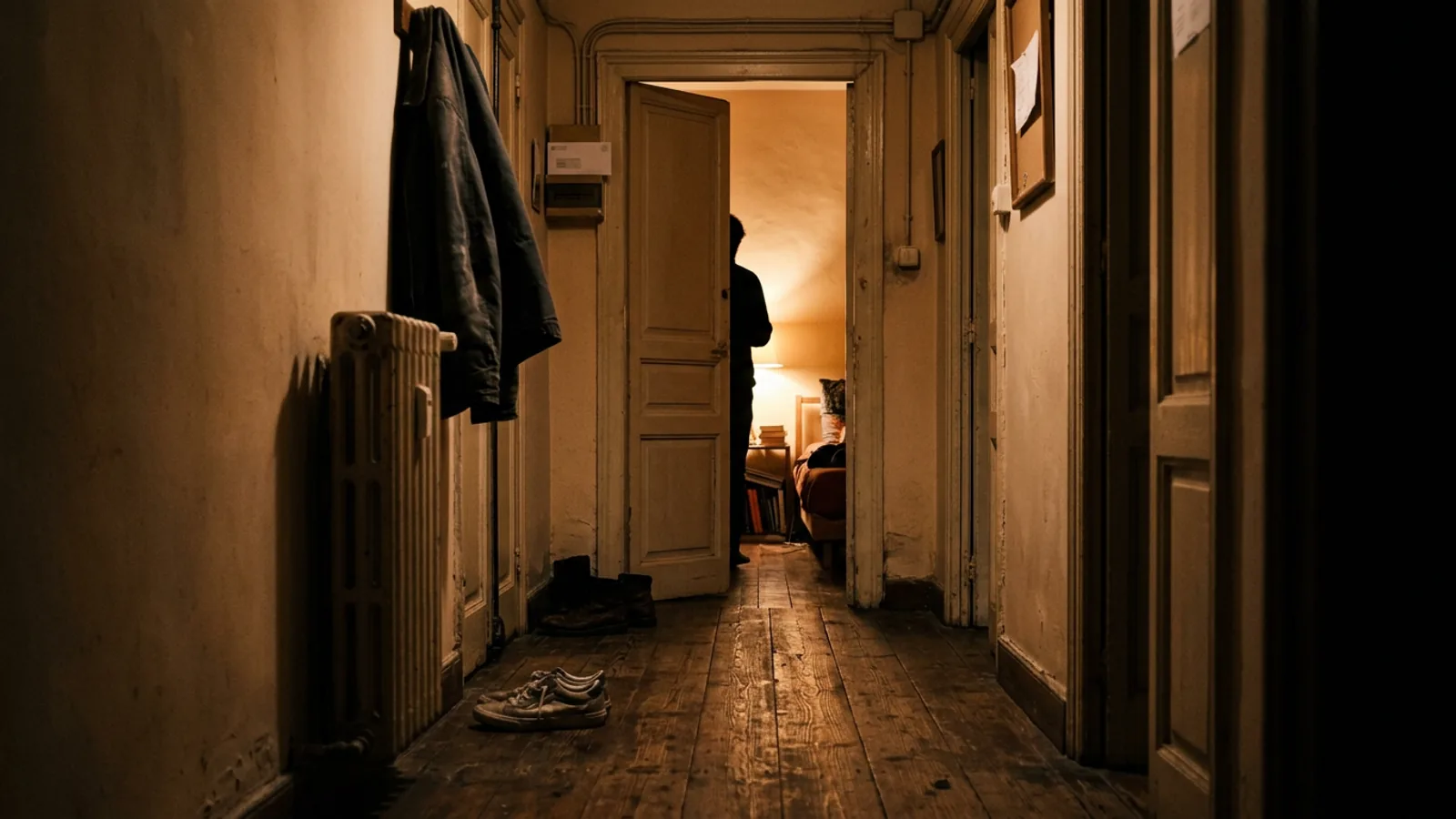
Heating at three in the morning isn't free
The first few weeks you don't give it any importance. The new flatmate works in hospitality, gets home at half two, turns the heating on because the flat is freezing, takes a twenty-minute shower, leaves the hallway light on and goes to bed at four. You know because you hear it, but you tell yourself that in a shared flat everyone has their own rhythm. The reasonable view. Until the first full quarter's electricity bill arrives and you discover it's gone up forty-two percent compared with the same quarter last year. And then you start thinking.
The night-schedule conflict is one of the least discussed in shared flats because it has a layer of taboo: it seems that questioning it is questioning the other person's right to have their own life. But that's not it; it's that that life carries an energy cost which is currently split equally as if everyone consumed the same. And the basic data of any household say no, that a night user consumes considerably more than a daytime one, especially in winter. The question isn't moral, it's accounting.
Why the equal split breaks down in these cases
The equal split of utilities rests on an assumption: that all the flat's residents use the house more or less the same. In a flat of three people with similar schedules, that assumption is reasonable. The three of you turn the heating on at the same time, the lights come on when the evening starts to fall, the showers cluster between seven and nine. Total consumption is divided by three and no one argues.
In a flat with one clearly out-of-step user, the assumption breaks. Night heating at thirty-five degrees for four hours while the others sleep isn't shared consumption, it's individual consumption that the system, by inertia, splits among everyone. And since the bill arrives in the shared pot, the unfair part is invisible until someone calculates it. The additional electricity bill, in a seventy-square-metre home with electric heating and a regular night user, can sit between forty and eighty euros more a month in the depths of winter. Two hundred and forty to five hundred euros a year, split equally as if nothing had happened.
Three ways to rethink the split
1. A night coefficient by hours
The first option, and the most mathematical, is to introduce a coefficient that reflects the unequal use. If the night flatmate uses heating and lights four hours more than the others, that means, in very rough numbers, that their personal electricity bill weighs between twenty and thirty percent more than the rest's. In a flat of three, instead of paying thirty-three percent, they'd move to paying between forty and forty-five. The virtue of this model is that it's objective and can be explained on a sheet of paper. The drawback is that it requires an adult conversation and a prior agreement; it isn't imposed unilaterally because the daytime flatmate got annoyed one day.
2. Separate fees for the night schedule
A more radical variant: separate the heating supply from the shared pot and let each person pay for their own use, while the rest of the expenses stay split equally. In practice, this is approximated by putting an individual electric heater in the night room and leaving the central heating off at night. The energy that heater consumes is borne by the flatmate. It's a very clean model if the home allows it and if the bills can be segmented. It works less well in flats with non-individualisable central heating.
3. Accept the imbalance in exchange for something
The third option, rarely voiced but very common in real life, is to accept the energy imbalance in exchange for something else. The night flatmate does the bathroom shop, takes on the community chores or pays a small symbolic fixed surcharge. It isn't a mathematical split, it's a cohabitation agreement. It works if the flat has good chemistry and if everyone agrees that the friction of calculating cents every month is worse than that of accepting a reasonable mismatch.
The problem of noise as an indirect cost
There's a second cost, even more invisible, that almost no one quantifies: noise. The night lights and heating come with a bill. The noise at half three in the morning doesn't, but it produces a real cost in the form of lost productivity for the daytime flatmate the next day. A person who sleeps badly for more than a month starts performing worse at work, which in financial terms amounts to a real loss of capacity. That doesn't get billed, but it's felt.
This, said without drama, is what makes these situations turn toxic over time. It isn't the heating or the hot water, it's the accumulated feeling that one person sleeps badly because the other lives their life without adjusting anything. And that feeling, in cohabitation, far outweighs any number on the bill.
How to open the conversation without seeming petty
The key is to raise the readjustment with data, not with complaints. If the bill has gone up forty euros a month since the new person moved in, that's a fact. If the heating is on for twice as many hours as before, that's another fact. And if the schedules of the three are different but the split is still equal, it's worth reviewing the flat's internal contract. It's best to propose it in a conversation at the table, with the latest bill on the table, without an accusatory tone, and to put the three options above on the table.
For that conversation to work, you need a common, transparent database within everyone's reach. If each flatmate pays the bills on their own and no one has the full picture, the debate degenerates into suspicions. What a modern shared flat needs is a living ledger where every flat expense is recorded with who pays it and how it's split, and where one glance is enough to know the month's split. This is what a tool like ControlarGastos does: it records the shared expenses, splits them according to the coefficient you agree on, and distributes the cents by largest remainder, not by truncation, so that no one always pays the rounding. Without a system, the conversation rests on impressions; with a system, it rests on figures.
Conclusion: living together is negotiating continuously
A shared flat isn't an association of identical schedules, it's an agreement between people with different lives who decide to share walls. That diversity is good, it makes flats interesting, but it demands accepting that equal splits are only fair when use is similar. As soon as it stops being so, fairness comes through adjusting the split, not through keeping the original formula as dogma.
Maturity in cohabitation consists, precisely, of knowing how to renegotiate without it seeming like a drama. You go down to the kitchen, you look at the bill, you put a figure on the table and you reach an agreement. The alternative is for resentment to grow silently for six months and one day blow up over something trivial. And that, believe me, is quite a bit worse than having an uncomfortable fifteen-minute conversation in November.
Keep reading

Farewells and Welcomes: Parties Inside the Flat
The flat's birthday, the farewell for the one moving to Berlin, the welcome for the new one. A shared flat's internal parties are tradition and an accounting trap. How to organize them so neither the guest of honour overpays nor the rest pay for the first one's party by default.

The flatmates' fridge: yoghurts with surnames
The labelling system on the yoghurts, the assigned shelves, the cold war over shared products. The fridge isn't an appliance, it's the emotional thermometer of a shared flat.

Lift fee on a top floor: pay the surcharge or not?
In many shared flats there's an extra community fee for using the lift. Who pays it, whether it goes into the shared pot, and what the law says. A practical guide so you don't end up arguing every month with whichever flatmate is on duty.
Sound familiar?
ControlarGastos automates splitting expenses with your partner, flatmates and friends. Split to the cent, no arguments.
Start for free