Lift fee on a top floor: pay the surcharge or not?
In many shared flats there's an extra community fee for using the lift. Who pays it, whether it goes into the shared pot, and what the law says. A practical guide so you don't end up arguing every month with whichever flatmate is on duty.

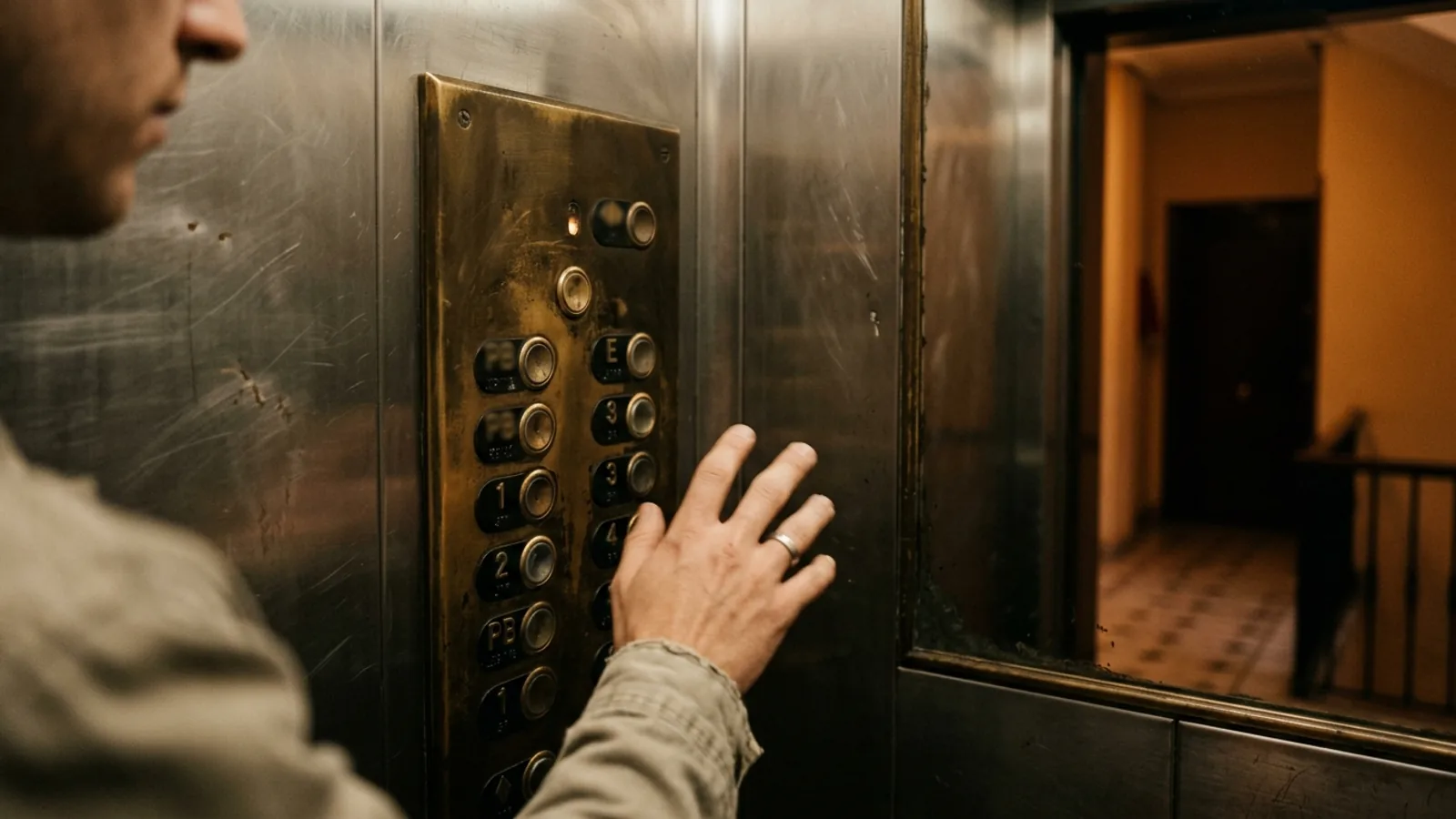
The community envelope nobody wanted to open
We'd been on the seventh floor for six months and nobody had looked at the breakdown carefully. Until one Sunday morning, while one of us is washing up and another is making weak coffee in the kitchen, someone blurts out: "hey, why is the community fee eighty-two euros when at my cousin's flat it's fifty?". We pulled the paper out of the drawer, already bearing a mug ring, and discovered that twenty-two euros correspond to an extra lift-use surcharge. That is, for using the lift more than the people on the first floor. And from there the real debate begins: whether the flat's shared pot pays that part or whether it falls to the lease holder, the one who signed with the management.
It's a minor conversation only on the surface. Twenty-two euros a month is two hundred and sixty-four a year, and in a flatshare of three that cost becomes significant when a single person bears it because "it shows up on the bill in their name". The problem, moreover, isn't the money itself: it's that when someone unilaterally decides how it's split, the cohabitation gets dirty. And a shared flat holds up only so long before resentment slips in through the crack.
Why the lift surcharge exists and what it means legally
Extra fees for lift use aren't a whim of the community: they're regulated by the Horizontal Property Act. When a building has a lift, the costs of maintenance, upkeep and modernisation are split among the residents according to their participation coefficient, unless the bylaws say otherwise. And many old communities established at the time that the higher flats should pay an increased fee because, quite simply, they use the device more. The difference between a first floor and a seventh in terms of real use is enormous: the first-floor resident almost always walks down, the seventh-floor one doesn't.
But careful, this is an agreement between the flat's owner and the community. It has nothing to do with who lives inside. A tenant, in legal terms, is not a resident-owner: the owner is. When the landlord signs the lease and passes the community fee on to the rent, they're passing on the whole cost, including the lift portion. What changes is what you, inside the flat, do with that bill when it arrives.
Three splitting models and which one makes sense
1. Everything into the shared pot, no distinctions
The cleanest model: the community fee goes in whole into the flat's pot, along with electricity, gas, internet and water, and is split equally among all the tenants. The justification is reasonable: you all live on the seventh floor, you all use the lift, none of you would walk down seven flights on purpose to save three euros. The surcharge is, in practical terms, a housing expense like any other. If the flat's monthly rent is fourteen hundred euros and the community fee eighty-two, the real cost of the flat is fourteen hundred and eighty-two, and that's what gets divided. Full stop.
2. Only the landlord absorbs the surcharge
This model is defended by those who interpret the lift portion as the owner's expense, not a usage expense. The logic is: the owner bought a high flat knowing it paid more in community fees, and that surcharge goes with the building. If they want to pass it on, let them raise the rent. But once the rent is set, tenants shouldn't pay part of a structural levy on the property. It's legally defensible when the lease doesn't explicitly pass on the entire fee, but it tends to be a complicated battle in practice.
3. A split proportional to declared use
The rarest model and, almost always, the most conflictive. It involves each person declaring how many times a day they take the lift and splitting the surcharge accordingly. It sounds fair on a whiteboard, but it's unliveable. No one wants to turn every trip up into a spreadsheet entry, and in the end the flatmate who works from home the most pays more for the pure reason of being at home. You discard it within thirty seconds of trying it.
What the lease says (and what almost no one reads)
Before choosing a model, it's worth reading the lease. It sounds obvious, but most tenants don't remember exactly what their community-expenses clause says. There are three usual wordings: the first passes the whole community fee on to the tenant with no nuance, the second explicitly excludes special levies and extraordinary works, and the third, rarer one, leaves the fee to the owner. The difference between the three directly affects who absorbs the lift fee. If your lease belongs to the first group, the whole cost, including the lift, is yours and there's no legal debate, only the internal debate among flatmates. If it belongs to the second, it's worth checking whether the extra lift fee counts as ordinary or extraordinary, which is rarely clear.
Reading it takes ten minutes and saves months of circular argument. If after reading it you're still in doubt, a call to the building manager usually clears up the origin of the surcharge: whether it answers to a special levy for modernising the device or has been part of the ordinary fee for decades. The difference matters because special levies run out, whereas structural fees stay.
The problem of the bill's single holder
There's an additional friction rarely discussed at the start: the community fee is paid by just one person. It comes out of their account every month by direct debit, and the others pay them back afterwards. That means that, as far as the bank is concerned, that person is systematically fronting the flat's money. If the others are late, their balance suffers. If someone leaves the flat mid-month and doesn't settle up, that part hangs from their name.
In practice, this turns the holder into a kind of involuntary treasurer. And most shared-flat conflicts don't arise from the amount itself, but from the timing imbalance: I pay on the first, you pass it to me whenever you remember. That imbalance accumulates. It starts with the community fee, continues with the electricity, ends with "hey, who paid for the last butane cylinder?".
How to close the conversation cleanly
The reasonable thing, unless the lease says otherwise, is to put the whole community fee into the shared pot and forget about the internal breakdown. The lift surcharge stops being a lift surcharge and becomes "part of the cost of living here". In exchange, you need a system that records who fronted what, who owes whom, and that settles up at month's end without anyone having to sit down with a calculator.
What you need, whatever the tool, is a living ledger: someone logs the community charge, the rest automatically show up as partial debt, and when settlement day comes the amounts are exact to the cent. This is what a tool like ControlarGastos does: it logs the expense, calculates each person's share and distributes the cents by largest remainder, not by truncation, so that no one always pays the rounding. No argument, no paper, no sense that one person keeps the accounts while the rest walk on by.
Conclusion: the fee isn't the problem
Extra lift fees aren't a scandal, they're a feature of high flats. They exist, they're on the paper, and it's worth looking at them when you sign the lease and not six months later. What is a scandal, and a far more serious one, is letting money settle unevenly among flatmates because one bears the direct debit and the rest live in the clouds. That erodes cohabitation faster than any political dispute, and leaves wounds that take years to heal even when no one shares a roof anymore.
A shared flat works when money moves transparently and predictably. The lift fee doesn't matter; what matters is that the split has a system that doesn't depend on memory or the mood of the day. If you have one, you can argue about more interesting things. Because that's what you live together for: not to keep the accounts of an old three-storey building, but to have a reasonable adult life, with clear accounts and evenings without a spreadsheet on the table.
Keep reading

The flatmate who comes home late: noise, lights, heating
There's a financial cost to living with someone on a night-owl schedule that almost no one quantifies. Heating at three a.m., lights on all night, a shower at five. When it's fair to renegotiate the flatshare's contribution.

Skipping Cleaning Turns: Should It Mean Paying Up?
Whoever doesn't clean pays whoever does. It sounds radical, but it's one of the few models that actually works in shared flats where someone always ends up doing more. How to apply it without it feeling like a disguised employment contract.

Farewells and Welcomes: Parties Inside the Flat
The flat's birthday, the farewell for the one moving to Berlin, the welcome for the new one. A shared flat's internal parties are tradition and an accounting trap. How to organize them so neither the guest of honour overpays nor the rest pay for the first one's party by default.
Sound familiar?
ControlarGastos automates splitting expenses with your partner, flatmates and friends. Split to the cent, no arguments.
Start for free