Friends' weddings: gift, travel, hotel — the real cost
A far-off wedding can easily cost between 400 and 700 euros between gift, outfit, transport, and hotel. How to decide which to attend, which to excuse yourself from, and how to plan it as a group without it showing.


The invitation lands in the WhatsApp group
It arrives on a Saturday night. A photo of an envelope, a pretty stamp, a countdown. "We're getting married". The congratulations fire off within thirty seconds. What also fires off, silently and only in some heads, is a small mental spreadsheet: the venue is 350 kilometres away, the wedding is on a Friday, you have to ask for time off, accommodation at least two nights, a gift above average because it's someone in the inner circle. The preliminary figure is around 500 euros before getting the first real quote.
A friend's wedding is, as a rule, one of the most lopsided social expenses of the year. It comes when it comes, it isn't planned, it feels obligatory, and it splits into five categories that are rarely assessed together. Doing so is the minimum reasonable thing.
Why the real cost is systematically underestimated
The human mind is good at calculating a single cost and bad at summing up a basket. When someone says "I'm getting married," the brain automatically goes to "gift, 100 euros," and stops there. The full basket, by contrast, only gets discovered when you book the hotel and look at your bank statement three weeks later.
In the Spain of 2026, an average destination wedding (understanding destination as any city that isn't your own, more than 200 km away) has five categories:
- Gift: between 80 and 150 euros if you go alone, between 150 and 250 if you go with a partner. Digital gift registries and the "cash in an envelope" have almost entirely replaced the vase.
- Outfit: between 100 and 300 euros if you have to buy something new (shoes, shirt, dress, accessories). Zero if your wardrobe is well stocked.
- Accommodation: between 80 and 180 euros a night at a hotel near the venue, a minimum of two nights for a far-off Friday or Saturday wedding. Total 160 to 360.
- Transport: between 60 and 200 euros for the high-speed train or petrol plus tolls, there and back.
- Extras: hairdressing, the stag or hen do (which is a whole separate economic sub-wedding), food and drinks over the weekend outside the banquet.
The honest sum for a far-off wedding runs around 400 to 700 euros per single person, and between 700 and 1.200 if you go with a partner. In a year with three destination weddings, the figure can become, no metaphor, a full summer holiday.
Three models for deciding which to attend and which not
1. The concentric circles model
It works well if you're invited to several weddings a year. You define three circles: close friends (you always go, no debate), good friends (you go if the logistics are reasonable and the calendar allows), cordial acquaintances (you don't go, you send a discreet gift). The classic mistake is not having thought about the circles in advance and deciding case by case, which leads to accepting weddings out of social inertia and regretting it the Friday before.
The circle is defined by the honest question: if this person moved to another city tomorrow, would we still be in active contact in five years? If the answer is clearly yes, circle one. If it's "I think so," circle two. If it's "probably not," circle three. It's a hard question, but it saves many weekends and a lot of money.
2. The annual wedding budget model
You set aside, at the start of the year, a specific allocation for social events (weddings, stag and hen dos, christenings, communions), for example 1.500 euros. As invitations come in, they're deducted from the fund. When the fund runs out, the year's weddings are over, except for a conscious reallocation from another line (holidays, savings, leisure).
It's the coldest model and the most effective. It turns a fuzzy social decision into a clear budgetary one. If the eighth wedding of the year falls in August and the fund ran out in May, you have to say no or reallocate consciously. That's far more sustainable than going to all eight with the feeling that your current account is sinking.
3. The shared group logistics model
If several friends are going to the same wedding, shared logistics can cut the cost per person by between 25% and 40%. Car-sharing (saving 60 to 120 euros per person), a whole apartment rented between six (40 to 80 euros less per night than an individual hotel), a joint gift in an envelope with an agreed amount (which reduces the pressure of "what do I put in"), meals not connected to the banquet prepared as a group instead of at a restaurant.
This model requires an organizing person (or a system) to coordinate, record who pays what, and split it at the end. Without coordination, shared logistics ends up being a series of informal payments that always leave someone fronting more than their share.
The invisible problem: opportunity cost
A weekend wedding far away consumes, besides the money, two or three days of your annual free time. And that shows up on no invoice, but it's real. If you work five days, rest two, and that year you have 22 days of holiday, devoting three full weekends to weddings means you've turned almost 30% of your weekends that quarter into agendas with rigid schedules and travel. It's not trivial. The honest question is whether three circle-two weddings are worth a full week of real rest.
The answer isn't always no, but it's worth asking. There's a phenomenon often observed in groups of friends aged 28 to 38: a high wedding season (four or five invitations in twelve months) that coincides with the period in which these same groups are trying to save for a first home deposit, a postgraduate course, or a long trip. The conflict between both goals is mathematically predictable and emotionally difficult. Each wedding accepted out of inertia delays the other project by a few weeks, and over the year the accumulated delay can be three or four months of savings.
It isn't about choosing between friendship and money. It's about accepting that the yes to one thing is always a no to another, and that saying no to a far-off circle-two wedding doesn't destroy friendships; what destroys friendships is going reluctantly and commenting on it afterwards.
How to close it out as a group without arguments
A group of friends going to a wedding together needs, above all, to close out the split without the conversation dragging on forever. What works is appointing a coordinator (rotating, not always the same person), who records each shared expense (the apartment rental, petrol, the joint gift, Thursday's dinner, the group's hairdressing), defines who takes part in each one, and at the end of the weekend hands over a net balance. This is what a tool like ControlarGastos does: each expense goes in with its date and participants, the split is calculated with the cents by largest remainder and not by truncation, and at the end there's a clean balance instead of six payments crossing back and forth over two weeks.
Conclusion: a wedding isn't an invitation, it's a project
Maturity around weddings doesn't consist of going to all of them or skipping all of them. It consists of accepting that each wedding is a small project with five categories, a prior social decision, and a real opportunity cost. Treating it that way (with a budget, with circles, with shared logistics where it applies) gives the event back its original nature: the celebration of someone you love, and not a silent drain you discover in your bank statement six weeks later. The rest is process engineering applied to friendship, which is exactly what it is.
Keep reading

The group's annual barbecue: who buys what
The late-June barbecue brings together twelve people with very different appetites, diets, and budgets. Without a minimal system, someone ends up paying for everyone's meat and the group is left with a bad taste that isn't about the sauce.

Saunas, Escape Rooms, Karting: "One-Off" Fun Among Friends
Occasional 25-40 euros-a-head outings where one person books and everyone else pays later. A look at the ritual of collecting, the apps, Bizum, and why someone almost always ends up forgetting.
A Group Ski Trip: Lift Pass, Petrol, Accommodation
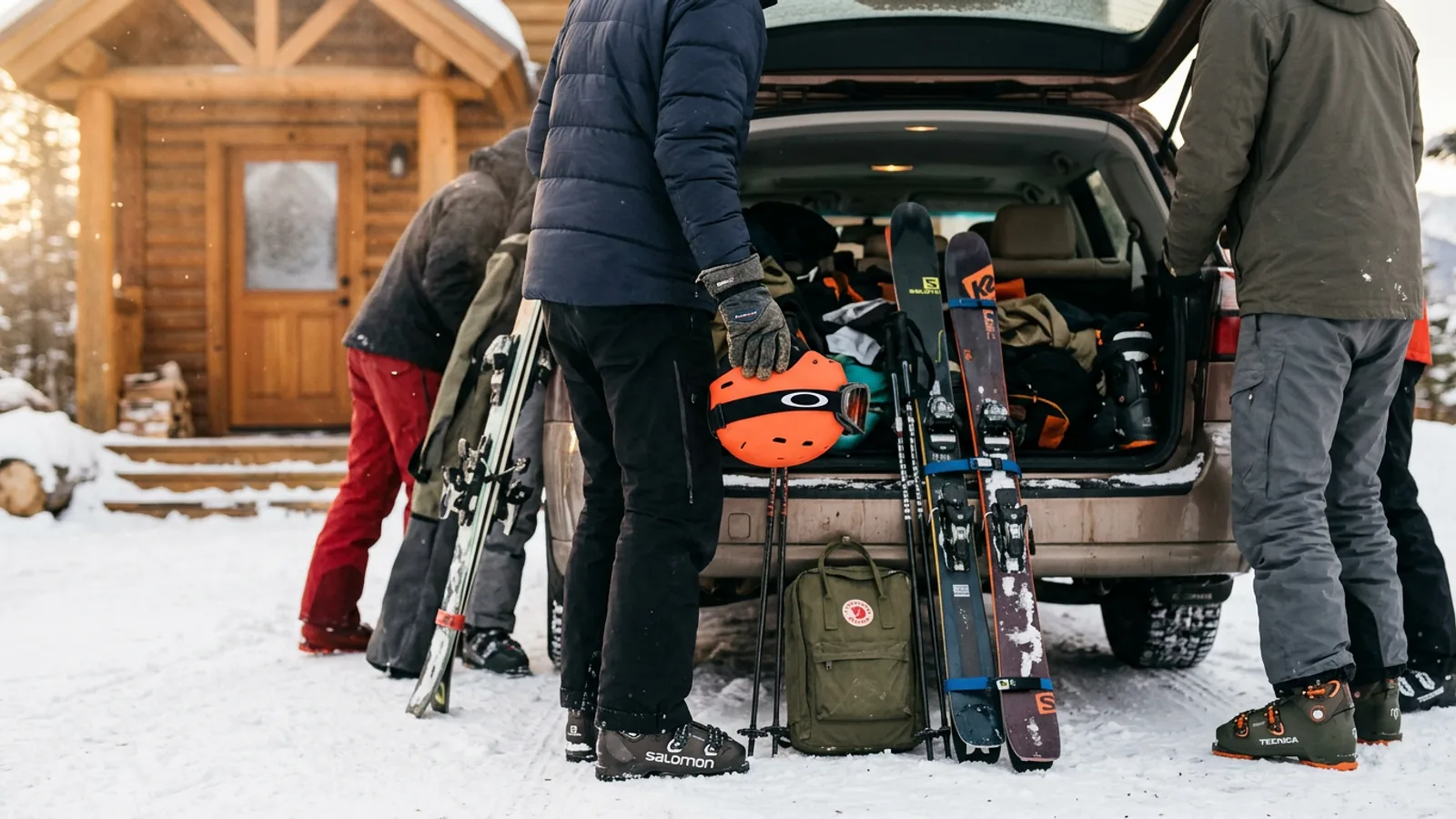
Lift pass, accommodation and petrol are three axes with different logics. If you put them in the same bucket and divide by six, someone ends up paying for what they didn't use. Here's a scheme to split it well.
Sound familiar?
ControlarGastos automates splitting expenses with your partner, flatmates and friends. Split to the cent, no arguments.
Start for free