The group's annual barbecue: who buys what
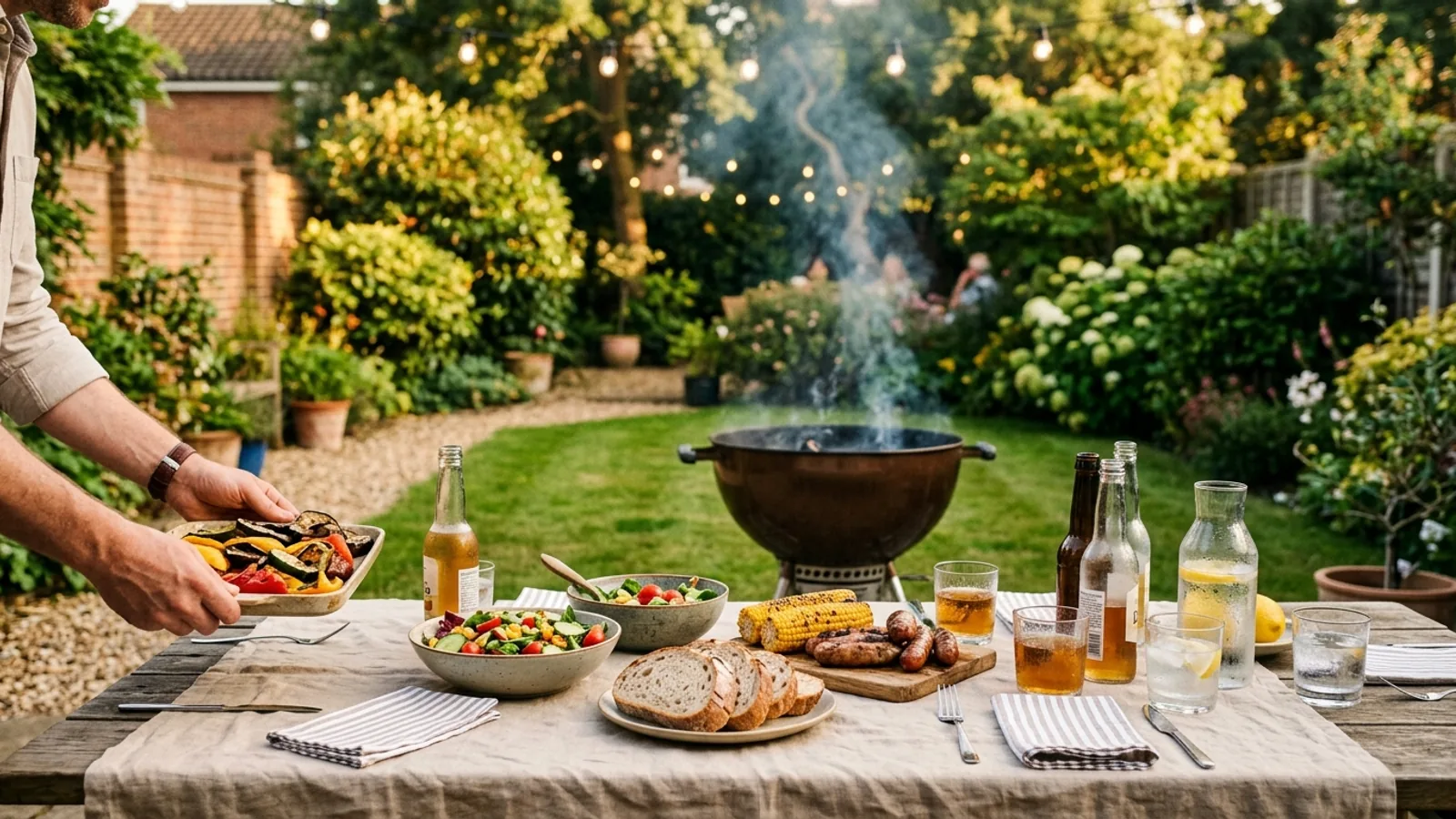
The late-June barbecue brings together twelve people with very different appetites, diets, and budgets. Without a minimal system, someone ends up paying for everyone's meat and the group is left with a bad taste that isn't about the sauce.

The day the barbecue became a logistics operation
There are group barbecues that last four hours and are remembered for ten years. And there are group barbecues that last four hours and produce a WhatsApp group called "barbecue accounts" that's dead but nobody dares to archive because there's a pending payment. The difference between the first kind and the second almost never lies in the food or the company. It lies in the planning. An annual barbecue for a group of ten or twelve people, with their partners, their allergies, their diets, their last-minute guests, and their two militant vegetarians, doesn't get improvised. Or, rather, it only gets improvised if someone is willing to be the one who pays for everything.
The annual barbecue is, in event-engineering terms, a small project with all the problems of a big one: scattered budget, critical dependencies, short deadlines, and stakeholders with contradictory preferences. The meat has to be fresh, the beer has to be cold, the salad can't repeat itself four times, the charcoal has to arrive before the people do and, above all, someone has to make sure the sum of all that doesn't end up in a spreadsheet at midnight. The good news is that there are three reasonable models for organizing the shopping. The bad news is that most groups go for the worst of them: none.
Why the one-person barbecue always ends badly
The one-person barbecue is the one organized by a single person, usually the most responsible one or the one with a garden, and to whom everyone else promises "I'll send you my share later." It's a model that looks efficient and ends up being the most expensive emotionally. The organizer fronts between 180 and 350 euros on a Saturday, does the mental provisioning, drives to two different places to buy the meat and everything else, and comes home with a fully loaded fridge and a receipt nobody will ever look at in detail again. After the meal, the payments trickle in. Half the group sends the 18 they've worked out, three others send 25 "just in case," one forgets entirely, and the organizer, a week later, has collected 70% of what they fronted and doesn't dare ask for the rest because it would be awkward to ask someone for 12 euros when you've just made plans to grab a drink with them.
The worst part of the one-person model isn't the lost money, it's the silent damage to the group. The person who organizes does the maths and decides that next year, without telling anyone, they won't be the one organizing. Next year there's no barbecue. If there's another volunteer, the cycle repeats with another victim. If not, the tradition ends. Every year whole groups lose their annual barbecue not for lack of enthusiasm, but because nobody wants to be the unpaid bank for everyone else again.
Three models for organizing a group barbecue without losing your soul
1. Divided list with a person responsible for each category
The first model is the most egalitarian and the one that scales best with large groups. It means dividing the shopping into categories and assigning each category to a person or couple, who is in charge of buying, bringing, and, if they want, cooking that particular part. One couple takes the meat, another person the drinks, another flatmate the salads and vegetables, another group the desserts and bread, and one last person the charcoal, the disposables, and the ice. Each person assumes their own spending and, at the end, a reconciliation is done so that the difference between what each person contributed is similar.
The numerical example helps make it clear. At a barbecue for twelve adults, a reasonable shop might break down into 110 euros of meat and cold cuts, 70 of drinks, 35 of salads and vegetables, 25 of desserts and bread, and 18 of disposables, which adds up to 258 euros, that is, 21,50 per head. If the couple on meat duty spent 110, they contributed 88,50 over; if the person on desserts spent 25, they contributed 3,50 over. Each person settles up with the others according to the difference. It's the split where it makes the most sense to apply largest remainder instead of truncating, so the fractions of a euro don't always end up punishing the same person.
2. Shared kitty before the event
The second model eliminates the friction of the after-the-fact reconciliation at the cost of some logistical effort beforehand. It means agreeing on a fixed quota per person based on the declared menu and collecting it in advance, before the shopping. If the group decides each adult head pays 22 and each child 8, and there are ten adults and two children, the kitty comes to 236. With that amount collected, two volunteers do the complete shop, bring back the receipts, and if there's money left over it's returned or kept for next year's barbecue. The virtue is that nobody argues at the end and the buyers don't front anything significant. The challenge is the discipline of collecting up front: you have to collect beforehand, no exceptions, because any after-the-fact collection turns the model into the one-person model in disguise.
3. Payment to the organizer with a logistics premium
The third model assumes that organizing has a cost and rewards it. One person volunteers as sole organizer, does all the shopping, sets up the barbecue and, in exchange, everyone else pays them the corresponding quota plus a small logistics premium covering travel, time, and the risk of fronting the money. For example, if the base quota per head is 22 and there are eleven attendees besides the organizer, each one pays the organizer 24, which gives them back their share and leaves them a cushion of about 22 euros. It sounds mercenary, but the groups that adopt this model discover it's the most stable in the long run, because it doesn't penalize the organizer and, in addition, it tends to attract more volunteers to the organizer role in future editions.
The problem of last-minute guests
There's a layer almost no group manages well: the last-minute guest. The new partner of one of the group's members, the cousin who's come to visit, the work friend who's just moved to the city. They arrive at the barbecue, eat, drink, and leave without anyone having explained the system to them. If the model is the divided list, their consumption wasn't accounted for and slightly throws off the accounts; if it's the shared kitty, they haven't contributed to the kitty; if it's payment to the organizer, someone will have to say something to them or absorb their share. The healthiest practical rule is that the member of the group who invites them assumes their guest's quota and charges them or not as they see fit, but without throwing off the general system. You can be very generous with last-minute guests; what you can't do is pass that generosity on to the rest of the group without warning.
How to close the accounts without killing the WhatsApp group
Whatever the model, there's an operational point that destroys more barbecues than people admit: closing the accounts. Twenty-eight messages in the group with photos of receipts, screenshots of payments, improvised calculations, and "I'll send it later" are the perfect recipe for next year's barbecue not happening. The technical solution is trivial. You need a system in which each person records what they contributed, it's automatically calculated how much each one owes each other, and the payments are made with a couple of clicks and stay on record. This is what a tool like ControlarGastos does for one-off groups: it turns the annual barbecue into a project with a clear profit-and-loss account and eliminates the calculator phase in the organizer's kitchen.
Conclusion: tradition is sustained by planning, not by goodwill
Annual group barbecues are one of the few traditions that survive the passing years, the moves, the children, and the changes of city. Keeping them going is worth it, but it demands treating the event with the operational seriousness it deserves. Agreeing on the model at the start of summer, assigning categories or collecting the kitty in advance, recording everything contributed in a shared system, and closing the accounts the same day, not the following week, is not bureaucratizing friendship. It's protecting it from the one thing that really kills it: the quiet but firm sense that someone has, once again, put in more than their share.
Keep reading

Saunas, Escape Rooms, Karting: "One-Off" Fun Among Friends
Occasional 25-40 euros-a-head outings where one person books and everyone else pays later. A look at the ritual of collecting, the apps, Bizum, and why someone almost always ends up forgetting.
A Group Ski Trip: Lift Pass, Petrol, Accommodation
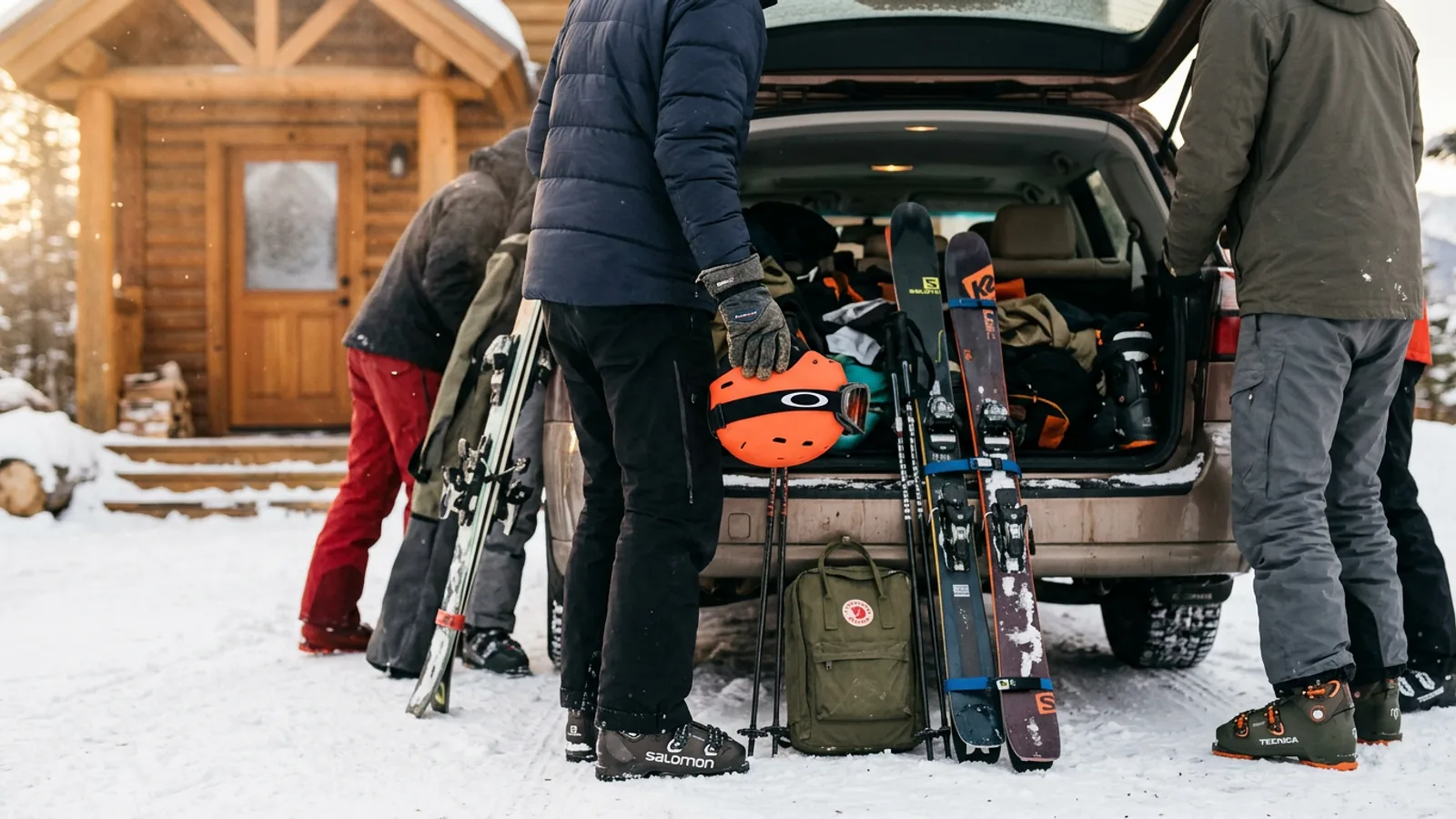
Lift pass, accommodation and petrol are three axes with different logics. If you put them in the same bucket and divide by six, someone ends up paying for what they didn't use. Here's a scheme to split it well.
Pizza for 6 with 4 Meat-Eaters and 2 Vegans: The Fair Split
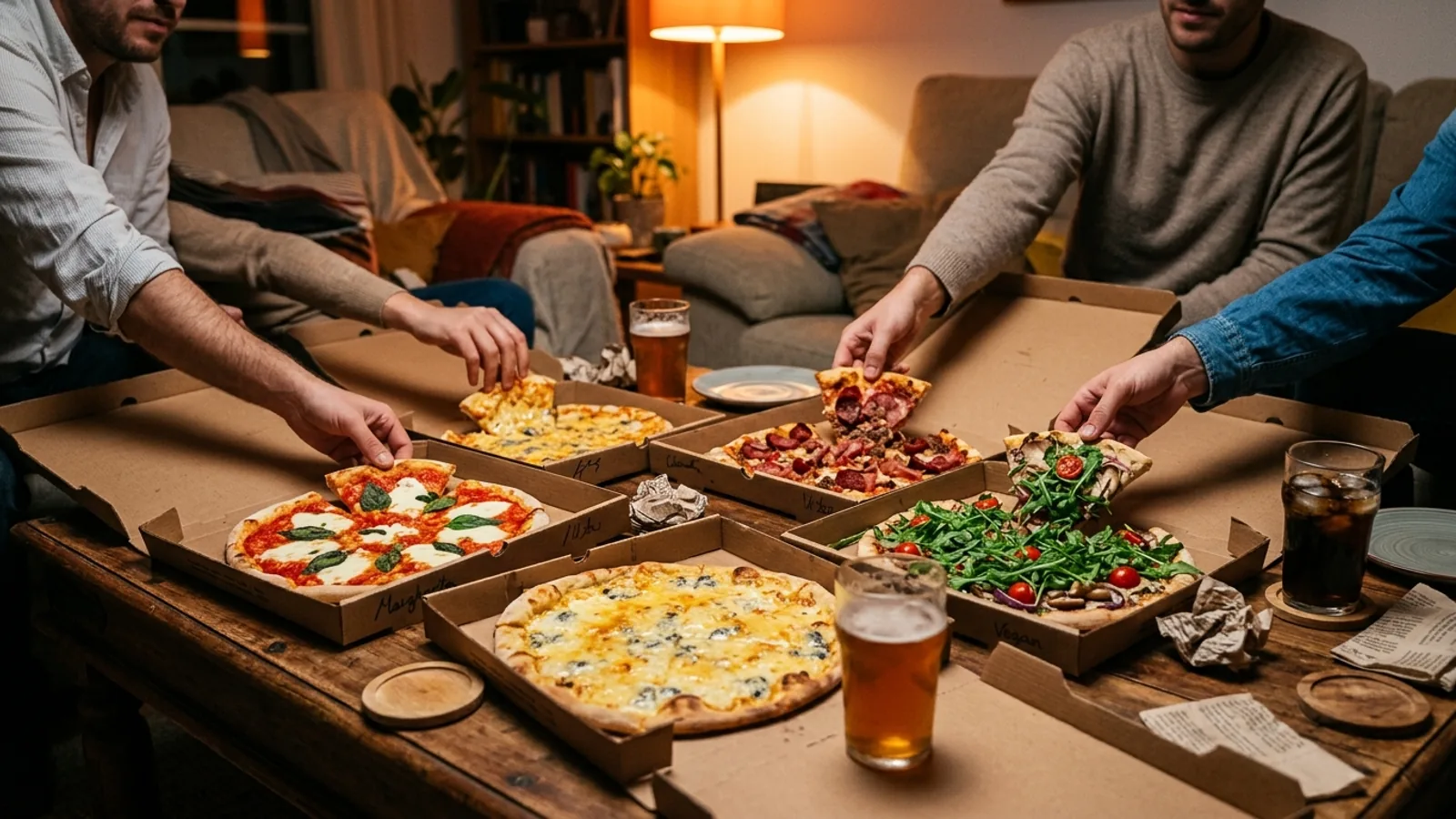
The margherita is cheaper than the four-cheese, and the porcini vegan costs the same as the barbecue. Splitting the total six ways looks fair, but it only is if everyone eats the same in value.
Sound familiar?
ControlarGastos automates splitting expenses with your partner, flatmates and friends. Split to the cent, no arguments.
Start for free