The flat's basic basket: the minimum list you always buy
The oil that runs out at eleven on a Tuesday, the phantom toilet paper, everyone's coffee that one person pays for. The minimum list of things a shared flat always needs and how to organize who buys what without turning it into a cold war.


The oil that's never there when you need it
There's a phenomenon common to shared flats that anyone recognizes instantly: the empty oil bottle at eleven on a Tuesday night. Someone goes to make pasta, opens the cupboard, discovers the bottle has those last two murky fingers that are no good for anything, looks at the fridge hoping for a miracle, and ends up having boiled eggs for dinner. If the flat has only been running a short while, it's not a fight; if it's been year and a half, that empty bottle is the perfect metaphor for a system with no system. Oil, like toilet paper, bin bags, salt, shared coffee, cleaning products, and dishwasher tablets, belongs to a category almost no shared flat manages well: the permanent basic basket.
The basic basket is that set of fifteen to twenty things that always have to be available, that belong to no one in particular, that everyone uses in quantities hard to measure, and that, nonetheless, almost always end up being bought by the same person. The reason is statistical: in any group of three or four people there's always one who's more foresighted or more obsessive about certain things not running out. That person buys before it's gone, pays, doesn't always make a note of it and, over time, assumes it's "their thing". The flat works, but the living arrangement erodes in slow motion because someone is contributing a small surplus every month without the rest noticing. Until one day it explodes over a yoghurt that wasn't theirs.
Why the informal list is never enough
The first intuitive answer to the problem is "let's make a list on the fridge and everyone writes down what they see is missing". It works for two weeks. After that, the list either fills up with everything (including individual items like one person's favourite yoghurt) or stays empty because nobody looks at it. The list shared in the WhatsApp group lasts a bit longer, but tends to become an inbox where people flag things and nobody buys them until the situation is critical. What fails in both cases isn't the tool, it's the lack of a protocol defining what goes on the list, who buys, how often, and how the cost is split.
The basic basket also has an uncomfortable property that sets it apart from the rest of the flat's expenses: the receipt doesn't match individual consumption. If someone buys a five-litre bottle of extra-virgin olive oil for 38 euros, those 38 euros get spread over three months and among four people, but the charge appears in full on a Saturday in October. The flatmate who moved in a month ago and is leaving next month is paying first and using later, in proportions no receipt reflects. Without a system, this gap gets settled by feeling, not by the numbers, and the feeling always fails in favour of the most absent-minded.
Three ways to organize the flat's minimum list
1. Monthly shared kitty with a rotating person in charge
The first system, and probably the simplest for flats of three or four people, is to agree on a shared monthly quota for the basic basket (for example, 18 or 22 euros per person), collect it at the start of the month in a kitty or a dedicated account, and rotate who's in charge of doing the shopping. Each month a different person takes over: they check what's missing, do the bulk shop, keep the receipts in an envelope or photograph them, and at the end of the month settle up. If they've spent over, they're compensated; if they've spent under, the kitty starts the next month with a positive balance.
The quota is calibrated over the first two months. For a reasonable basket for four people (oil, salt, sugar, flour, pasta, rice, shared coffee, tea, toilet paper, kitchen roll, bin bags, detergent, dishwasher tablets, fabric softener, bleach or cleaner, sponges, basic spices) a kitty of 80-90 euros a month is usually enough. Split the cents of the close by largest remainder, not by truncation, so that over twelve months a systematic fraction doesn't end up accumulating in favour of the sharpest one.
2. Assignment by fixed categories
The second system assigns permanent categories to each person, instead of rotating the buyer role. One flatmate is always in charge of cleaning products and toiletries; another, of the dry basics pantry (oil, salt, coffee, infusions, flours); another, of the disposables (toilet paper, kitchen roll, bags, kitchen consumables); and the fourth, if there is one, of spices and one-off items. Each person buys their own when they see it's needed, records the receipt in a shared system and, at month's end, it's reconciled so nobody has paid much more than the others.
The virtue of this system is that each person knows their category very well and buys efficiently. The weakness is that it requires discipline in recording receipts, because if someone stops noting them down for two weeks, the model collapses. For flats where one person travels a lot or the turnover is high (Erasmus students, six-month expats), this model works worse than the shared kitty.
3. Quarterly wholesale shop plus ad-hoc restocking
The third system is the favourite of flats with storage space and a taste for efficiency. Once every two or three months, two people from the flat go together to a wholesaler or a cash-and-carry and buy the bulk of the basic basket in one go: five litres of oil, a large pack of toilet paper, boxes of dishwasher tablets, a kilo of coffee, sacks of pasta and rice, jugs of detergent. The invoice is split equally among everyone and stays paid for the following months. For quick restocks (salt, spices, some specific brand that runs out), a small shared kitty of 30 euros a month covers the incidentals.
This model reduces the number of accounting operations to three or four a year and frees the flat's head from the "I always have to be on top of it". It has two requirements: an available cupboard and two people willing to do the big shop together, which in some flats can be harder than the financial agreement itself.
The problem of personal products that look shared
There's a grey zone that overlaps with the basic basket and that almost never gets discussed: products that look shared but are personal. The milk one person drinks, the shampoo another uses, the lactose-free yoghurt of the allergic person, the fragrance-free detergent of the one with sensitive skin. If they go into the shared kitty, someone will be paying for something they don't use; if they're left entirely out, the fridge fills up with five different milks and four different yoghurts. The most balanced practical rule is to define a "generic" version of each product that does go into the shared basket (the standard milk, the standard detergent) and leave out all the "premium or special" versions that each person assumes individually. It isn't perfect, but it avoids the two extremes: the person paying for the other's expensive shampoo and the one who discovers the fridge has three identical bottles but not a single egg.
How to automate the close without living with the calculator open
Whatever the system, the operational problem is always the same: recording receipts and reconciling. Any shared flat that has tried to do it by hand knows the system lasts a month and a half, and from the third month on it either becomes a tangle or gets abandoned. What the flat needs is a system in which each person records their spending when they do the shopping, assigns the receipt to the right category, and at month's end automatically sees who owes how much to whom. This is what a tool like ControlarGastos does when used for a shared flat account: it turns the informal fridge list into a small, legible account book, where nobody has to remember anything and the reconciliation does itself.
Conclusion: the basics deserve a boring protocol
The flat's basic basket is, in economic terms, a modest figure. A shared kitty of 80 euros a month doesn't seem like a serious matter. And yet, it's one of the fronts that damages flat-sharing relationships the most over the year. The reason isn't the money, it's the feeling of permanently contributing something the other doesn't give back. Agreeing at the start of the contract (not six months in, when there's already accumulated resentment) what goes in the basket, how it's bought, and how it's reconciled, is one of those boring conversations a shared flat handles much better than the brilliant conversation about the year's plans. People remember shared flats for the dinners, not for the lists; but shared flats survive or not according to the lists, not according to the dinners.
Keep reading

How to handle pending debts from a flatmate who moved out?
They left the flat owing the last month's electricity and half an undeposited bond. Legal routes, friendly routes, and a serious calculation of when to chase and when to accept the loss.
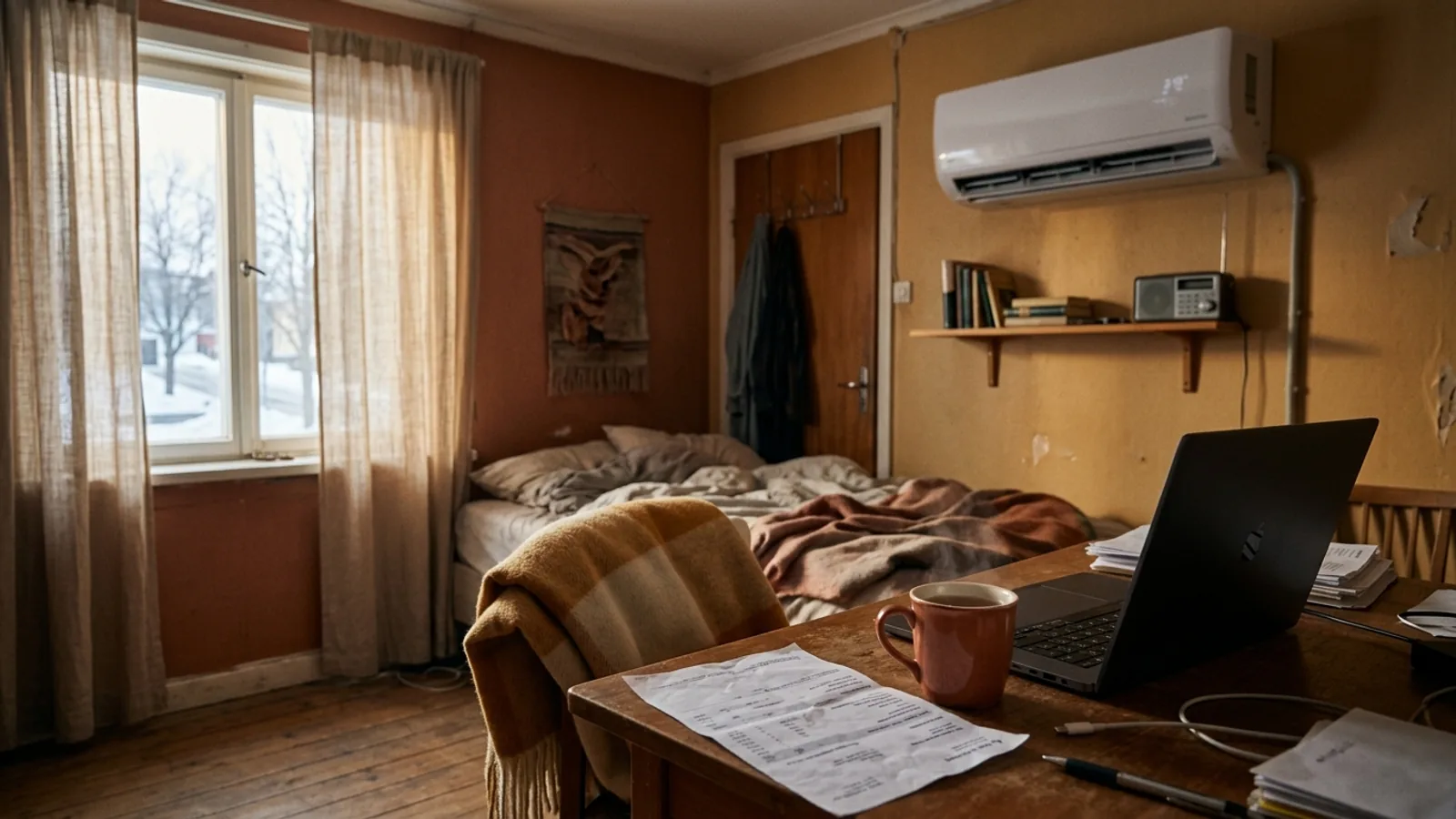
Individual electric vs. central heating: the split changes
A heat pump in every room looked like total freedom. Until the electricity bill arrives and you discover that the cold-blooded one at the end of the hall has wiped out everyone's budget. Rules for not falling out in February.

The flatmate who comes home late: noise, lights, heating
There's a financial cost to living with someone on a night-owl schedule that almost no one quantifies. Heating at three a.m., lights on all night, a shower at five. When it's fair to renegotiate the flatshare's contribution.
Sound familiar?
ControlarGastos automates splitting expenses with your partner, flatmates and friends. Split to the cent, no arguments.
Start for free