How to handle pending debts from a flatmate who moved out?
They left the flat owing the last month's electricity and half an undeposited bond. Legal routes, friendly routes, and a serious calculation of when to chase and when to accept the loss.

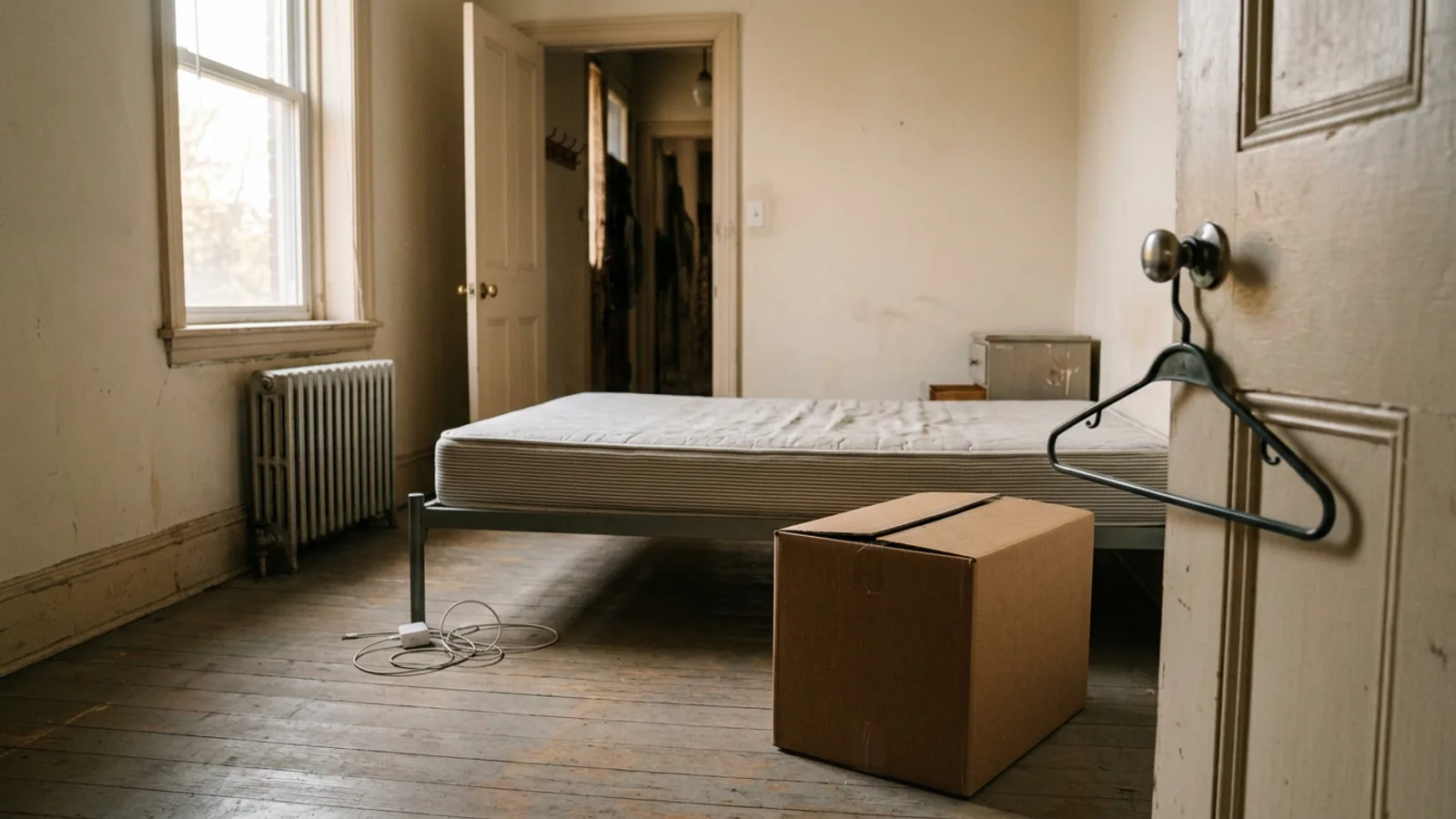
The day the door closes and nobody's quite sure what happens with the electricity
The scene is always similar. The one who's leaving has spent three months announcing they're leaving, finds a flat at the end of the month, does the move on a Saturday morning, and leaves a couple of boxes "to pick up next week" that will take two months to disappear. Monday the electricity bill arrives, covering the last two months including theirs. Tuesday the landlord asks when we're returning the storage-room keys. Thursday someone says in the flat's group chat, in the tone of someone avoiding the subject: hey, have we asked them for their share of the electricity yet?
No, you haven't asked them. And it's there, in that exact moment, in that small group of messages nobody wants to open, that the shared money starts to rot. A week later the figure is no longer 47 euros, it's 47 euros plus an awkward conversation. Two weeks later it's 47 euros plus a silence. And after a month, it's 47 euros plus a cooled friendship.
The pending debt of the one who moved out is, almost always, an amount that economically doesn't ruin anyone. What ruins is the energy it costs to collect it.
Why the soft approach doesn't work past the first month
The silent strategy almost every shared flat adopts is the same: "I'll tell them when I see them". We say it in good faith. We say it because we think a birthday will come up, a casual beer, a natural excuse to raise the subject without raising it. And sometimes it happens. But most of the time the opposite happens: the one who left is left with a small knot in their stomach every time they see a message from the group, you stop inviting them to plans so it doesn't look like you're doing it to dun them, and the conversation you were going to have "when you saw each other" becomes harder to have the more time passes.
There's a psychological asymmetry worth recognizing: the later you claim a debt, the more it costs socially. After thirty days, half the honest claims turn into interpretive disputes ("but wasn't this already in the deposit?", "I thought you'd covered the previous month"). After sixty, it's no longer a debt, it's a grievance.
The only management that works is the early, cold, documented kind.
Three ways to close a shared-flat debt
1. A clear, written conversation with a deadline
The first way, and the one that closes 80% of cases, is to write a direct message to the ex-flatmate with three elements: how much they owe, why (a short list), and a reasonable deadline (between 7 and 14 days). No reproach, no passive-aggressiveness, no nervous emojis. Something like: "Hi, going over the flat's expenses I see there's 47 euros pending from last bimonthly electricity bill and 22 from September's internet. Total 69. Shall I send you the payment details or do you prefer a transfer? Before the 30th works for me."
The key is not to let more than one message go unanswered. If they don't reply after three days, a second brief message. If after a week they still don't reply, a phone conversation. The accumulated friction is defused when it's named in time.
2. Offsetting against the pending deposit
Many shared flats run with an internal deposit between flatmates: when you move in you put up an amount (typically a month's rent or half) that's returned when you leave, once the pending bills are settled. If that deposit exists, the conversation gets simpler: the debts are deducted from the amount being returned, and only the net is handed over, with the breakdown in a message. It's the ideal scenario and it's worth having it foreseen in the flat's internal agreement from day one, not inventing it the day someone leaves.
If there's no internal deposit, and the landlord holds the contract deposit until the end of the whole tenancy, the problem gets more complicated. In that case, it's worth the group agreeing in writing that the deposit, when it comes, is split first by offsetting the pending debts of the one who left, and only afterwards in equal parts. This requires the consensus of the current tenants, but it's perfectly legitimate between private parties.
3. Formal claim through civil channels
The last route, when the amounts justify it and the refusal is clear, is the order-for-payment claim (the judicial monitorio procedure, regulated by the Civil Procedure Act). For monetary debts that are due, demandable, and documented, you can file without a lawyer or court representative up to 2.000 euros. The respondent has 20 days to pay, oppose, or not reply. If they don't reply, it's enforced. If they pay, case closed. If they oppose, it goes to an oral trial.
The practical problem is that for a shared-flat debt (typically between 50 and 400 euros) the order for payment is disproportionate. The court fee is modest but the time and energy are high. It makes sense as a credible threat rather than as a real route, unless the debt exceeds 1.000 euros or there's obvious bad faith.
The invisible problem: proof
Most shared flats document nothing. There's no internal agreement, no written record of who paid for the washing machine when it broke, no minutes of the internal deposit. That turns any late conversation into "I remember" against "I remember". And since the one who no longer lives there has no incentive to remember, their memory tends to be conveniently short.
The only effective defence is preventive: recording each shared payment the moment it's made, with who took part, and for how much. Not out of distrust towards the person you live with, but out of respect for the person who'll live with you in six months when someone else moves out.
How to turn off the tap from the start
What a shared flat needs isn't an exhaustive legal agreement (nobody's going to read it). It needs a living system where each shared expense goes in with a date, amount, concept, and participants. When someone leaves, the system spits out the pending net balance and the conversation's over. That's what a tool like ControlarGastos does: you record the shared bills as they're paid, you assign who takes part in each one, and it splits the cents by largest remainder, not by truncation, so nobody always pays the rounding. The day someone moves out, the balance is right there, no interpretations.
Conclusion: sometimes the most mature thing is to accept the loss
Not all debts get collected. There's a point, normally between two and six months, when a small debt stops being a debt and becomes a symbol. Chasing it past that point costs more than it's worth, and the cost is paid in mental energy you need for other things. Accepting the loss consciously, noting it mentally as a price learned, and closing the cycle is sometimes the most adult decision. The lesson that remains isn't for the one who left, it's for you: next time, record from day one and claim in time. Early debts get collected. Late ones get buried.
A final note worth jotting down for next time. Any well-organized shared flat should agree, from the signing of the first contract, on two concrete things: first, which account is the "flat account" where direct debits land and each flatmate contributes their share; second, how the early departure of any member is handled. It isn't a legal formality, it's an agreement between adults that takes fifteen minutes and saves months of friction when someone decides to change city. Flats that have gone through a well-handled clean departure normally fill up again quickly and without upheaval. Those that drag inherited debts get infected: the next flatmate moves into a flat that already has a dark history, and that's felt from day one.
Keep reading

The flat's basic basket: the minimum list you always buy
The oil that runs out at eleven on a Tuesday, the phantom toilet paper, everyone's coffee that one person pays for. The minimum list of things a shared flat always needs and how to organize who buys what without turning it into a cold war.
Individual electric vs. central heating: the split changes
A heat pump in every room looked like total freedom. Until the electricity bill arrives and you discover that the cold-blooded one at the end of the hall has wiped out everyone's budget. Rules for not falling out in February.
The flatmate who comes home late: noise, lights, heating
There's a financial cost to living with someone on a night-owl schedule that almost no one quantifies. Heating at three a.m., lights on all night, a shower at five. When it's fair to renegotiate the flatshare's contribution.
Sound familiar?
ControlarGastos automates splitting expenses with your partner, flatmates and friends. Split to the cent, no arguments.
Start for free