Light bulbs, toilet paper, dish soap: the flat's medicine cabinet
The small invisible expenses of a shared flat add up to more than they seem. Light bulbs, toilet paper, cleaning products, salt. Why the expense app doesn't capture them and how to organise them without becoming the living-room accountant.
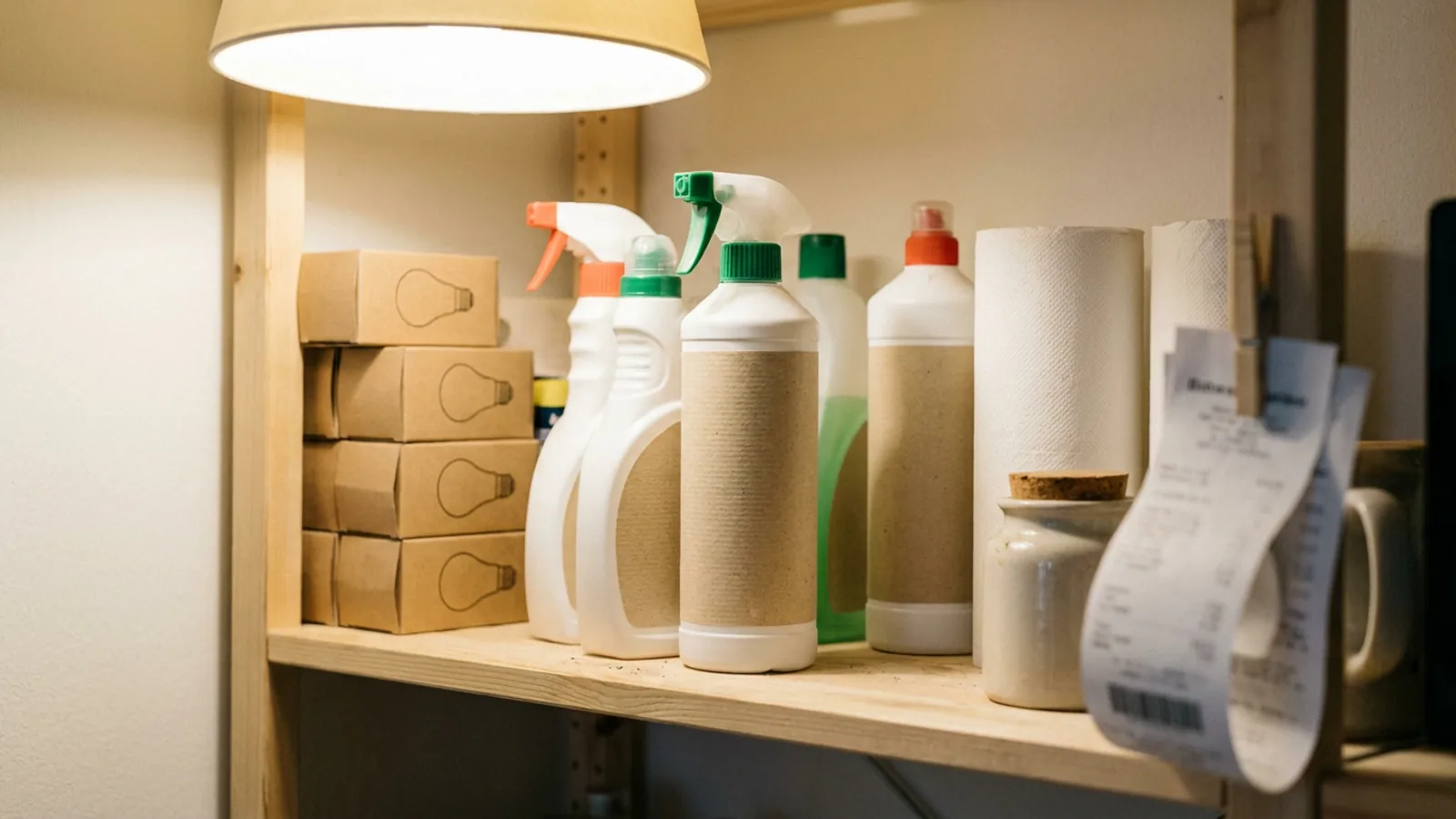
The shelf nobody stocks
You've been in the flat six months. One morning you walk into the bathroom and there's no toilet paper. You go down to the supermarket, buy a pack of twelve, head back up and leave it on the shelf. Three weeks pass. You walk into the bathroom again, and again there's no toilet paper. The pack of twelve has vanished. Nobody has restocked it. You suspect it's your turn this time too, because the last time the flatmate at the end of the hall complained and nobody wants another late-night meeting.
This scene, repeated with light bulbs, salt, dishwasher tablets, washing-up liquid, bleach, sponges, bin bags, tampons from the shared box, kitchen roll, coarse salt, bathroom air freshener, coffee from the common kitty and candles for when the power goes out, defines a whole category of cohabitation that no expense app captures well. They're small, recurring, invisible expenses, and absurdly irritating when the memories of not having restocked pile up.
Let's call it the flat's medicine cabinet. And let's accept that it's the first place where serious cohabitation problems show up, long before rent does.
Why the expense app doesn't solve this
Shared-expense tools are designed for identifiable expenses: dinner, rent, electricity, the big shop. Clear amounts, recognisable categories, an obvious shared benefit. But when we talk about the flat's medicine cabinet, the model breaks for three reasons.
The first is the size of the amount. A low-energy light bulb costs between 5 and 9 euros. A pack of twelve toilet rolls, 8 to 14. A litre of floor cleaner, 3 to 6. Logging each one as an individual expense generates more mental friction than the money it saves — nobody is going to open an app to record 4.80 euros, and if they do it once, they won't do it the next time. The app turns into a graveyard of expenses entered wrong or forgotten entirely.
The second is attribution. If one flatmate buys the dishwasher tablets and another uses them more during their cooking shift, how is it split? By number of people makes sense. By actual use would be fairer. But tracking actual use is absurd. Apps force you to pick a scheme and apply it, and the medicine cabinet just won't fit.
The third, and the most important, is frequency. The big supermarket shop is done once a week or once a month; rent, once a month; electricity, every two months. The medicine cabinet is replenished twenty-two times a month in small batches, spread among all the members, with no clear pattern. Documenting it line by line costs more than it's worth.
Three models that do work
1. Common kitty with a fixed monthly contribution
It's the classic that remains the most efficient for flats of three to five people. Each person puts in between 8 and 15 euros a month — calibrated in the first two months according to real consumption — into a physical kitty or, better, a shared account with an attached card. Everything in the medicine cabinet comes out of that kitty. Nobody logs anything individual: the unit of account is "the kitty", not "the roll of paper".
It works because it eliminates the transaction cost. A flatmate goes down to the supermarket, pays with the kitty card, comes back up and leaves the receipt in a box or throws it away. There's no split, no debt, no conversation. The discussion shifts from "who pays" to "how much to put in each month", which is a once-a-year conversation, not a once-a-week one.
A plausible example: a flat of four people, a common kitty of 12 euros a month per head, a total of 48 euros a month for household products, toilet paper, light bulbs, cleaning products and shared pantry basics like salt and oil. If there's a surplus, it's adjusted downwards the following quarter. If it falls short, upwards. It's trivial.
2. Shared list with mandatory rotation
It works in small flats — two or three flatmates — where the common kitty feels disproportionate. There's a shared list (a messaging group, a shared note, whatever) where you jot down each time something runs out. The rule is simple: the next person to go to the supermarket brings it. And the responsibility for "doing the full round" rotates every two or three weeks to avoid the same person always going.
The split is done at the end of the month with a photo of the pile of receipts summed up and a division by number of residents. It's not perfect, but it's honest and doesn't require a physical kitty. The key is that the list is always visible and that adding an item is faster than ignoring the problem.
3. Splitting by category
Less popular but very stable when it works: each flatmate "adopts" a whole category for the entire year. One handles household and cleaning. Another, paper and bathroom items. Another, light bulbs, batteries, electrical bits and minor DIY. Each pays for their own category, and at the end of the quarter you compare, adjust if there's a large deviation and carry on.
It's especially good for long-standing flats, with people who have lived together for two or three years. It turns the medicine cabinet into a distributed maintenance system rather than transaction accounting. But it fails fast if someone new moves in: you have to reassign, and that always generates a conversation.
The secondary problem: what gets used without anyone smelling it
There's an even more invisible layer: the toothpaste someone uses from the other's tube ("just a bit"), the shampoo shared without having said so, the borrowed razor blades, the ibuprofen from the literal medicine cabinet when someone has a hangover. This technically isn't part of the common medicine cabinet, but it erodes trust just the same.
The solution isn't to account for it, it's to name it. A conversation at the start of the flat making clear what's shared (toilet paper, general cleaning products, light bulbs, salt) and what's personal (cosmetics, medicines, food on your own shelf) saves months of passive tension. Without that agreement, everyone assumes different things, and one day it breaks over the brand of shower gel that cost eleven euros.
How to close the system without becoming the living-room accountant
What works best is combining two things. First, a common kitty for everything everyday in the medicine cabinet, adjusted twice a year. Second, a tool for the few flat expenses that do justify an individual entry: electricity, water, internet, the shared big shop if there is one, dinner when you decide to order food for everyone. That tool shouldn't try to capture the medicine cabinet — it would be counterproductive.
Any decent system for a shared flat should clearly separate kitty expenses (not logged, just replenished) from itemisable expenses (logged and split). ControlarGastos does exactly that, and splits the cents by largest remainder, not by truncation, so the rounding on each bill split among four or five people doesn't always fall on the same flatmate.
The idea is that the app shouldn't become a second bureaucracy. It's used for what matters, and the kitty is trusted for the small stuff. That division is what separates the flats that last years from the flats that break apart in the sixth month.
Conclusion: cohabitation breaks over the invisible, not the big stuff
Nobody has left a shared flat over an argument about rent. People leave over the roll of toilet paper never restocked by whoever was supposed to restock it, over the light bulb that stayed blown for three weeks until someone caved and went down to buy it, over the empty bottle of floor cleaner nobody replaced. The big stuff gets discussed. The small stuff accumulates and one day becomes a packed suitcase.
Solving the flat's medicine cabinet isn't an accounting optimisation. It's a political decision about what kind of cohabitation you want to have. And almost always the right answer is the most boring one: common kitty, biannual adjustment, and not thinking about toilet paper for the rest of the year.
Keep reading
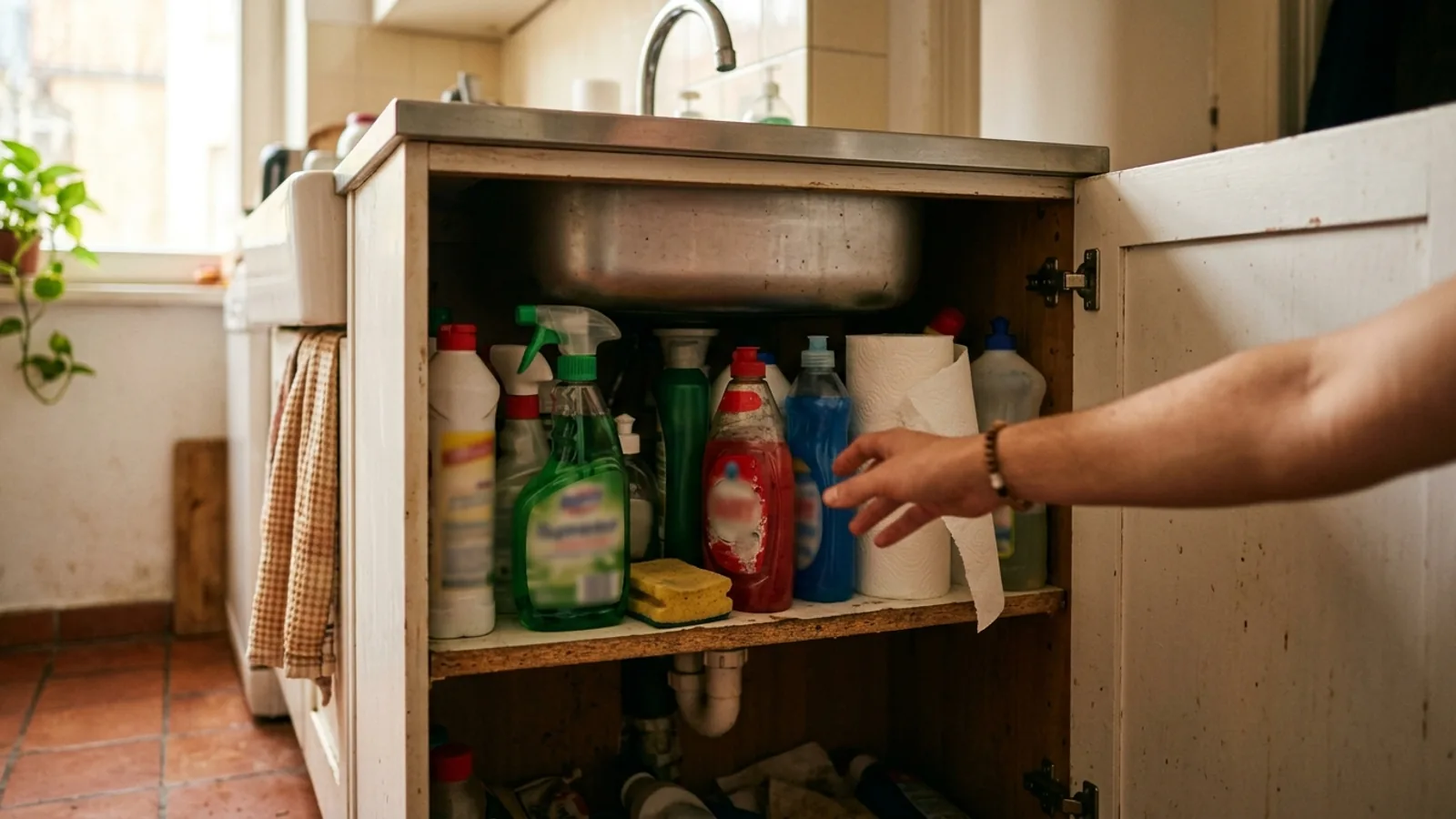
Shared cleaning supplies: the contested corner
Detergent, kitchen paper, and dishwashing liquid are the grey area where the most friction is generated in a shared flat. Here's a roadmap so that cleaning stops being a passive-aggressive affair.
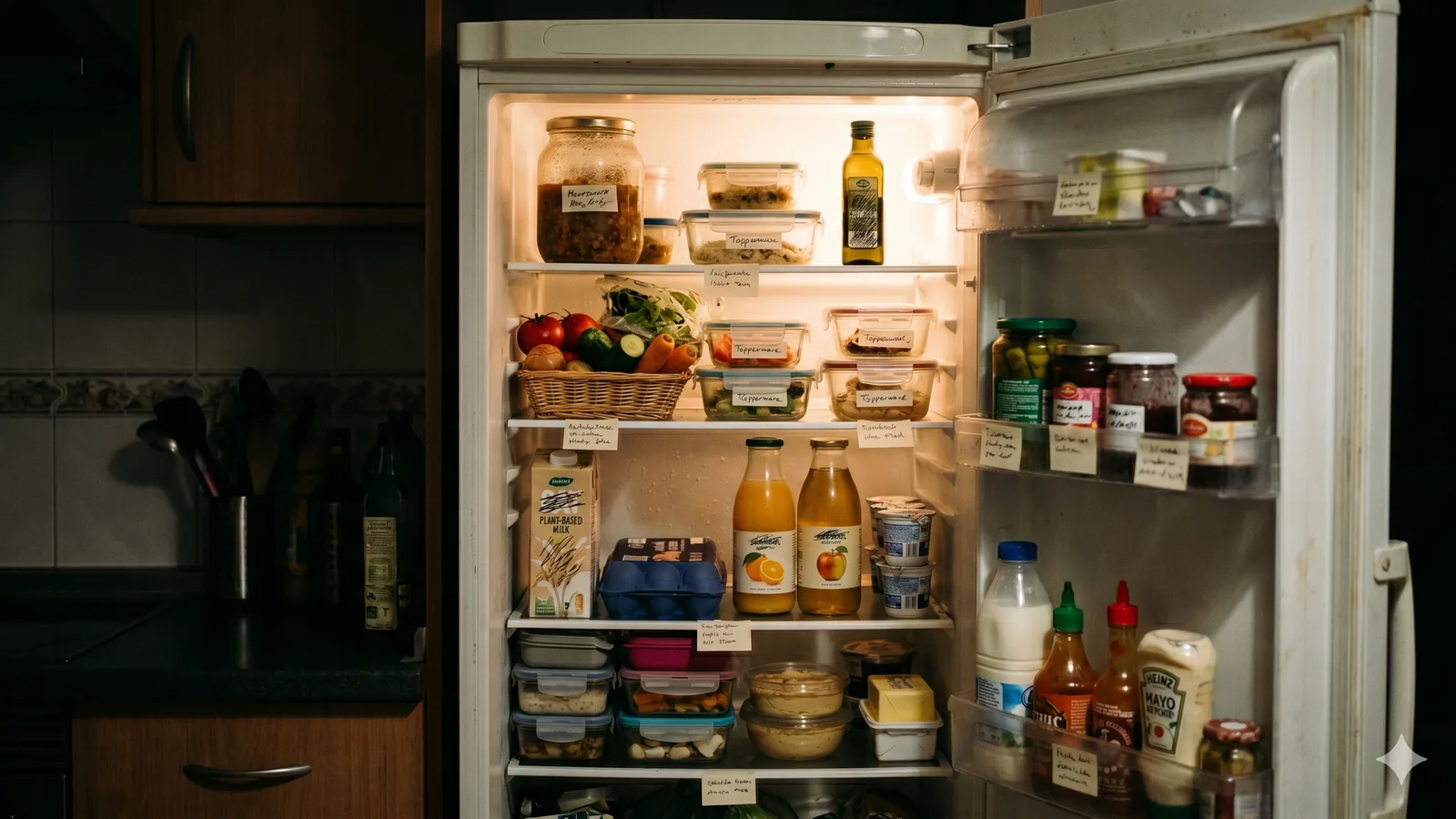
Groceries in a flat of four: the dilemma of different tastes
In a flat of four there are vegetarians, athletes who cook every day and people who order takeout. How to separate the common from the individual without turning the fridge into a cold-war zone.
Overnight guests: do they chip in for water and electricity?
Your flatmate's partner stays three nights a week. A friend from out of town lands on the couch for a whole month. Talking about utilities without sounding petty is possible, and it's usually cheaper than staying quiet.
Sound familiar?
ControlarGastos automates splitting expenses with your partner, flatmates and friends. Split to the cent, no arguments.
Start for free