Overnight guests: do they chip in for water and electricity?
Your flatmate's partner stays three nights a week. A friend from out of town lands on the couch for a whole month. Talking about utilities without sounding petty is possible, and it's usually cheaper than staying quiet.

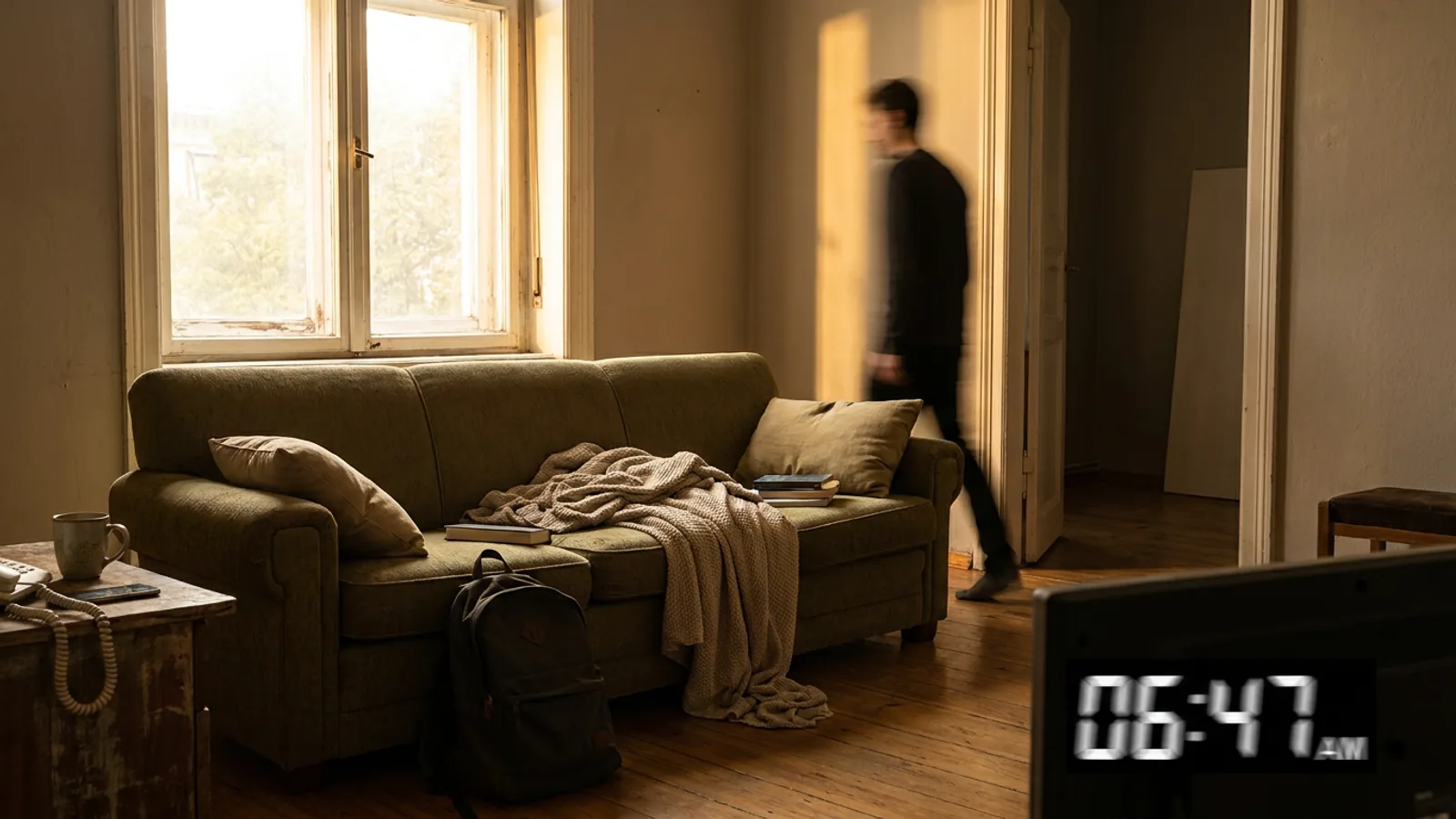
The couch has become a second bedroom
A Friday rolls around and, all of a sudden, the flat feels like a different place. There's a backpack in the hallway, a new toothbrush in the bathroom, a towel hanging up that nobody recognises, and the fridge is three yoghurts lighter. It's not the first time. Your flatmate's partner, who officially lives in another neighbourhood, has been sleeping here since Tuesday night. And it's not March, it's October, and the heating is already starting to kick in over dinner.
A shared flat has a problem that almost nobody names until it stings: the invisible guests. That grey zone between "my girlfriend's staying over tonight", "she's going through a rough patch" and "she's been here a month and a half but nobody knows how to bring it up". The lease has four names on it, but sometimes six people live there. And those four names are paying for six showers, six laundry loads, six phone chargers plugged in all night and six dinners.
For the record: nobody wants to be the flat ogre, the one from the meme charging a toll at the living-room door. But pretending that three nights a week don't affect the bill is naive. And letting a month go by without opening the conversation is the perfect recipe for resentment to creep in under the door.
Why this topic always grates
The friction isn't economic, it's about identity. Asking for money over a guest collides with two very Spanish beliefs that coexist badly: sacred hospitality ("my home is your home", even when your home is paid for by three other people) and the idea that talking about rent shares with a friend is stingy. Both beliefs work perfectly until someone has spent twenty days straight having dinner in the shared kitchen without ever having brought home a litre of milk.
On top of this comes a second layer: the "official" tenant tends to feel indebted to their flatmates for letting their partner in, and compensates with silence. By the time someone finally dares to raise the subject, there's so much accumulated resentment that the conversation starts off crooked. The trick to keeping it from derailing is to separate the noise from the real cost, and to start over from a neutral question: from how many nights does someone stop being a guest and start being a fifth resident?
Three thresholds you can actually defend
1. The occasional guest: no charge, just thanks
Someone coming over on Saturday for dinner, staying the night because of a party and vanishing on Sunday is just normal cohabitation. Trying to charge them a percentage of the water bill would be ridiculous and, above all, counterproductive: nobody would ever want to come back, and the flat would shrink to four bedrooms and a microwave. A soft rule applies here: you invite them in, you offer a towel, and you accept that the marginal cost of one extra person over 24 hours is negligible.
In rough figures: one extra shower, a charger, the bathroom light and two coffees come to around 0.80 to 1.50 euros of impact on the quarterly bill. It's not even worth the conversation. The exception is if that person also consumes a meaningful proportion of the shared food — but that's another debate altogether, the one about the fridge kitty.
2. The recurring partner: three nights a week or more
This is where the honest zone begins. If your flatmate's partner sleeps over every Wednesday, Thursday and Friday, they're using roughly 43% of the time the hot water, the heating and the electricity of the flat. On a winter electricity bill of 180 euros a month and a water bill of 60 euros every two months, the extra cost attributable to that person can run to around 25 to 40 euros a month. It's not outrageous nor ruinous, but it isn't zero either.
The reasonable solution isn't to bill them as a tenant, it's for the flatmate to take on that extra portion as part of their personal share. That is: instead of splitting utilities four ways, you split them four and a "half" ways. The half is put in by the person doing the hosting, not by the one being hosted. The conversation then stops being "your partner is costing us money" and becomes "let's recalculate your share of the shared costs so the split reflects reality". It's the same idea, with dignity.
3. The long stay: a friend from out of town for a month
A whole month is no longer a visit. It's an informal sublet with a couch. Here the conversation has to be explicit and quick — don't wait until it's over to ask for anything, because by then the person leaves without paying and the resentment stays behind. The reasonable move is to propose, from the very first week, a contribution towards utilities and the shared kitty, not towards rent (that belongs to the landlord), for a symbolic but real amount: 50 to 80 euros a month, everything included except food.
It's a low figure compared with any hostel and a high one compared with sleeping for free. That's exactly the zone it needs to be in: the guest feels they're being fair, the flatmates feel their structure isn't being thrown off balance, and nobody wakes up one morning feeling like a sucker.
The secondary problem: the heating and geopolitics
For years, the mental rule was "it doesn't matter who's at home, the electricity costs the same". That rule broke a while ago. The inflation that began in 2021 and dragged on, energy made more expensive by the recent geopolitical tension in the Middle East that has strained oil prices, and increasingly harsh winters in the interior of the peninsula have turned heating into the flat's second-biggest expense, right behind rent.
One extra person sleeping over every night of the winter moves the gas or central-heating electricity bill in a measurable way. It's not paranoia: domestic hot water, a more heavily used kitchen, extra hours of lighting and the thermostat a degree higher because there's someone more prone to feeling cold all add up. In summer the issue shifts to air conditioning, the exact same pattern. Pretending the marginal cost is still what it was in 2018 means you haven't opened your bill.
How to close the conversation without it blowing up
The most common mistake is to leave the topic until resentment is already spitting. What works is the opposite: turning it into a boring flat protocol, not a drama. A concrete proposal: at the initial meeting when signing the lease, or when someone new moves in, you agree in writing (a note in the group chat is enough) on a threshold. Something like: "if anyone sleeps in the flat more than six nights in a month, we talk about a contribution". No names, no accusations, applied equally to everyone.
The second step is to keep the accounts somewhere nobody has to remember anything. A shared spreadsheet works, but it ends up abandoned. A splitting tool designed for shared flats works better: it logs utilities, automatically divides by the relevant number of people for each period, and splits the cents by largest remainder, not by truncation, so nobody always pays the rounding. ControlarGastos does exactly that, and lets you adjust the monthly split when people move in or out without having to redo the entire bill.
The third step is the most delicate: accepting that the flat is a system, not an act of charity. Whoever hosts a recurring partner or a friend for weeks isn't being mean by reviewing the split. They're keeping the system alive so that next quarter nobody is tempted to leave.
Conclusion: hospitality has its accounting too
Domestic generosity is one of the good things about sharing a flat in your twenties or early thirties. There are couches that have saved marriages, breakups, moves, exam prep and an indecent number of Sunday nights. Nobody wants to turn that into a stingy spreadsheet. But generosity only holds up if it doesn't curdle into a silent grievance.
Talking about utilities with someone who hosts their partner three nights a week isn't being stingy. It's recognising that the flat is a shared infrastructure and that keeping its balance requires uncomfortable but short conversations. The alternative, that old familiar one of saying nothing and then no longer greeting each other in the hallway, ends up far more expensive than any bill.
Keep reading

Splitting Wi-Fi in a shared flat when one works from home
The one who works from home uses far more bandwidth and far more router time than the others. The legitimate question is whether that justifies paying more. There are arguments to defend it and arguments to knock it down, and the honest answer sits somewhere odd between the two.

Professional Cleaning vs Splitting Chores: The Calculation
Sixty euros once a month among four flatmates is fifteen a head. The question isn't whether it's expensive: it's how much your Sunday is worth and how heavily chore rotation weighs on shared living.

One person's pet in a shared flat: who pays the extra?
A dog or a cat brings costs that don't show up in the flat's rent: an extra deposit, occasional damage, hair on the shared sofa. Splitting it well keeps the pet from becoming the living room's silent conflict.
Sound familiar?
ControlarGastos automates splitting expenses with your partner, flatmates and friends. Split to the cent, no arguments.
Start for free