Buying Common Appliances: Ownership or Use?
A 30-euro toaster and an 800-euro sofa aren't the same conversation. Honest rules for common purchases in a shared flat and what to do when someone leaves and nobody knows whose the microwave was.

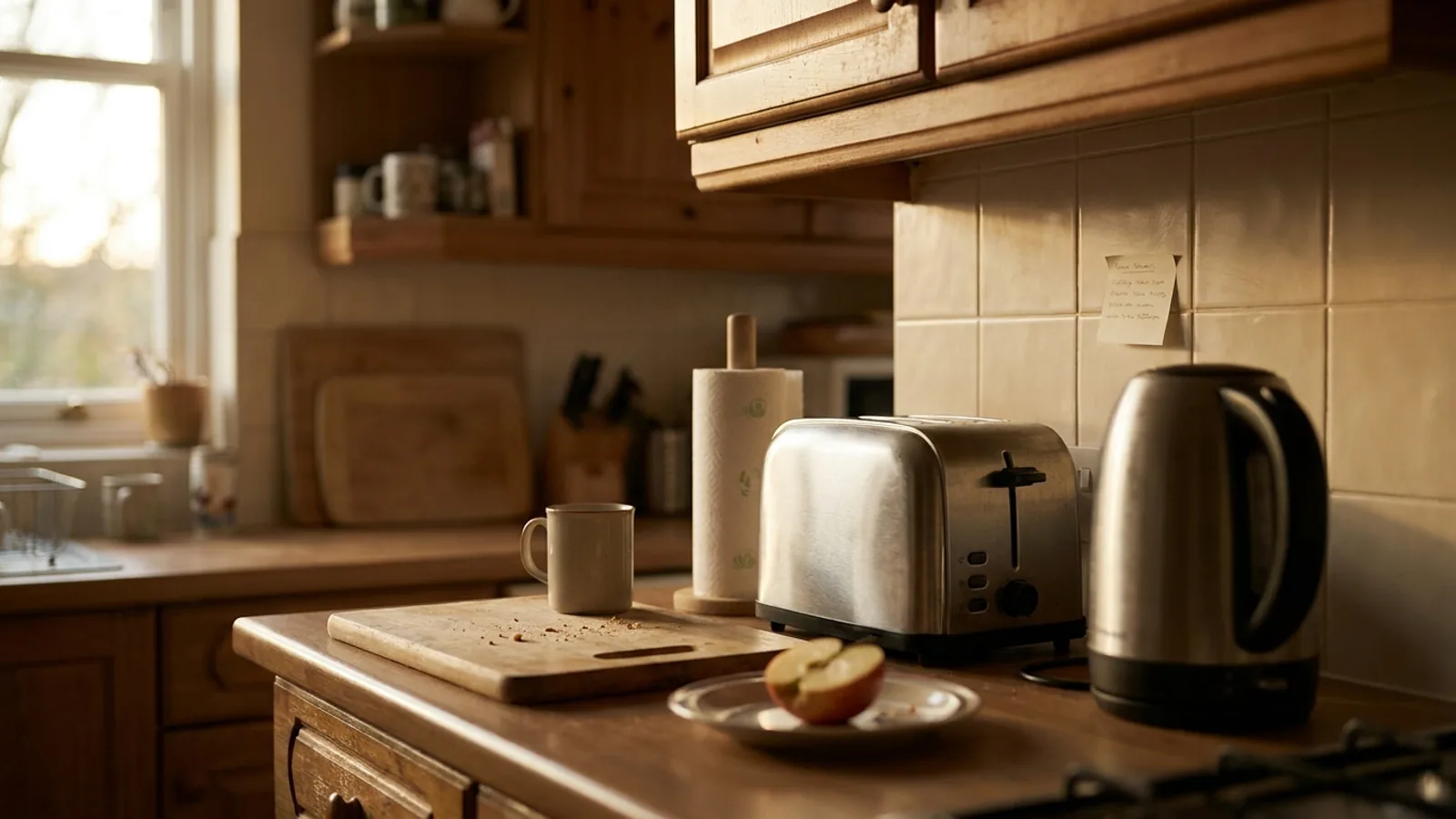
The question that comes up three months after moving in
You've been living in the shared flat for a month, you already know the rhythm of the water heater and you've memorised which cupboard each person keeps their cereal in, when one morning you discover the toaster has died. The flat's WhatsApp conversation is always the same: someone says "we need to buy another one," someone asks "do we all pay for it?", and someone, with luck, raises the underlying doubt: is the next toaster the flat's, or whoever pays for it? And if it's the flat's, what happens when someone leaves?
This, which seems trivial with a 30-euro toaster, stops being trivial when it's an 800-euro sofa, a 500-euro washing machine, a second-hand dining table that cost 200, or a television that weighs 22 kilos and has been in the living room for three years. Common purchases in a shared flat are one of the quietest sources of conflict at the end of every stay. And they're avoidable if they're thought through at the start, not at the end.
Why the "we'll sort it out" model always cracks
The dominant model in Spanish shared flats, especially among students and young professionals, is the "we'll sort it out" one. Someone buys something common, pays for it in full, and the others pay their share by Bizum the same week or never. That works reasonably well for small, consumable expenses (toilet paper, cleaning products, a new light bulb). It cracks as soon as the object outlives the tenant turnover.
The problem is that ownership of the flat's objects is left undetermined. If four tenants bought a sofa in 2024 for 800 euros, each paying 200, and two years later one of them leaves, what do they take? Their 200 euros? A quarter of the sofa's current value, which is probably 400? Nothing, because "they've already amortised it"? The answer varies depending on who you ask and usually ends in a tense conversation or in resigned silence, depending on the departing person's character.
Three categories worth separating from day one
1. Shared consumables
Products that get used up in a matter of weeks: toilet paper, detergent, salt, oil, aluminium foil, cleaning products, light bulbs. There's no ownership to argue about here. The discussion is only about splitting the monthly cost. The reasonable thing is for one person to buy when needed and to split it among everyone living in the flat that month, at the same percentage the rent is split at (usually equal shares, unless the rooms are very different).
The cleanest system here is either a monthly common fund to which each person contributes a fixed amount (15 to 25 euros a month per person usually covers consumables in the average flat), or individual logging of each purchase and a split at the end of the month. The first option is more convenient, the second fairer when there are significant differences in use.
2. Cheap durable goods (under 100 euros)
The toaster, the kettle, a new frying pan, a hallway rug, a standing coat rack. They cost little individually, but they're objects that survive several years and turnovers. Here the healthiest model is: one person pays for it and it counts as theirs. When that tenant leaves, they take it, or they leave it without asking for anything. The next flat, if it needs it, buys it again.
This avoids the impossible accounting of who bought what a year and a half ago. It's inefficient from the point of view of total spending (you end up buying two toasters where one could be bought), but it's efficient from the point of view of conflict avoided, which is the real currency in a shared flat.
A reasonable variant: the flat decides to have a "cheap common objects fund" to which each person contributes 30 or 50 euros on arrival, and this type of thing is bought from that fund. When someone leaves, they neither recover nor ask for anything; the fund stays with the flat. It's the entry-fee model, similar to the one some communities use.
3. Expensive durable goods (over 200 euros)
Sofa, washing machine if the flat provides it (rare, the landlord usually provides it), television, a decent dining table, an extra fridge for the kitchen, a portable air conditioner. Here neither the "whoever pays takes it" model nor the common-fund one works well, and an explicit written agreement is worth having as soon as the purchase comes up.
The cleanest agreement works like this: the object is bought among those living in the flat at that moment, in equal or proportional shares if you want to refine it. The date, the price, the names, and each person's percentage are signed (or kept in a chat group with a screenshot). An estimated useful life is agreed (five years for a sofa, eight for a washing machine, three for a cheap television, and so on). As time passes, the amortised value decreases linearly. When someone leaves, they receive from the incoming replacement the pending value of their share, calculated linearly.
A concrete example: an 800-euro sofa, bought in January 2025 among four tenants at 200 euros each, with an estimated useful life of five years (60 months). In January 2027, one leaves. 24 months have passed, 60% of the useful life remains. Their pending share is 200 x 0.60 = 120 euros, paid by the new tenant on arrival. It's mathematically honest, avoids murky conversations, and above all avoids conflict at the most vulnerable moment: when someone is leaving and everyone else is in a hurry to find a replacement.
The object nobody knows who it belongs to
After three rounds of tenant turnover, in almost any shared flat there appears an object whose ownership nobody remembers. A small table that was there when the current longest-standing tenant arrived, a sofa blanket that was already there on day one, a bathroom unit with suction cups. These objects are problematic because they usually stay in the flat by inertia and nobody claims them, until someone decides to throw them out and an old tenant turns up three years later claiming a piece of furniture nobody knew was theirs.
The pragmatic rule: if nobody in the current flat remembers having paid for an object and it's been there more than a year without a claim, that object belongs to the flat, with no individual owner, and can be thrown out, given away, or used without asking permission. It's not legally precise, but it's the only thing that works in reality.
How not to reach moving day with a half-filled spreadsheet
Keeping track of who paid what over two years in a WhatsApp group is a task almost nobody does well. Screenshots end up getting lost, dates get confused, there are arguments about whether a purchase was for the flat or personal, someone forgets that they fronted money at the supermarket last Tuesday.
A decent system should let you log each common expense in the moment, with a photo of the receipt if needed, assign the percentage to each person, see the running balance, and it distributes the cents by largest remainder, not by truncation, so that nobody always pays the rounding. ControlarGastos does exactly that, and it shows especially on the day one of the tenants leaves and two years of accounts have to be settled in an afternoon.
Conclusion: putting the boring stuff in writing so as not to argue about the important stuff
The difference between a healthy shared flat and a toxic one isn't who does more of the washing-up or who leaves the kitchen worst. It's largely whether the accounts are clear or not. Agreeing at the start how the ownership of common objects will be treated, what counts as a shared expense and what's considered personal, and how things will be settled when someone arrives or leaves, is a half-hour conversation that saves several much worse conversations in the months that follow. The flat's maturity, in reality, is measured by how the one who leaves is treated.
Keep reading

A Bank Loan for Appliances: Who Signs, Who Pays
Washing machine, fridge, sofa. When you buy them on credit, it matters enormously whose name the loan is in, what each person's credit file says, and how you split the instalments as the relationship evolves. It's a formality that looks minor and leaves a mark for years.

Splitting Wi-Fi in a shared flat when one works from home
The one who works from home uses far more bandwidth and far more router time than the others. The legitimate question is whether that justifies paying more. There are arguments to defend it and arguments to knock it down, and the honest answer sits somewhere odd between the two.
Professional Cleaning vs Splitting Chores: The Calculation
Sixty euros once a month among four flatmates is fifteen a head. The question isn't whether it's expensive: it's how much your Sunday is worth and how heavily chore rotation weighs on shared living.
Sound familiar?
ControlarGastos automates splitting expenses with your partner, flatmates and friends. Split to the cent, no arguments.
Start for free