Groceries in a flat of four: the dilemma of different tastes
In a flat of four there are vegetarians, athletes who cook every day and people who order takeout. How to separate the common from the individual without turning the fridge into a cold-war zone.

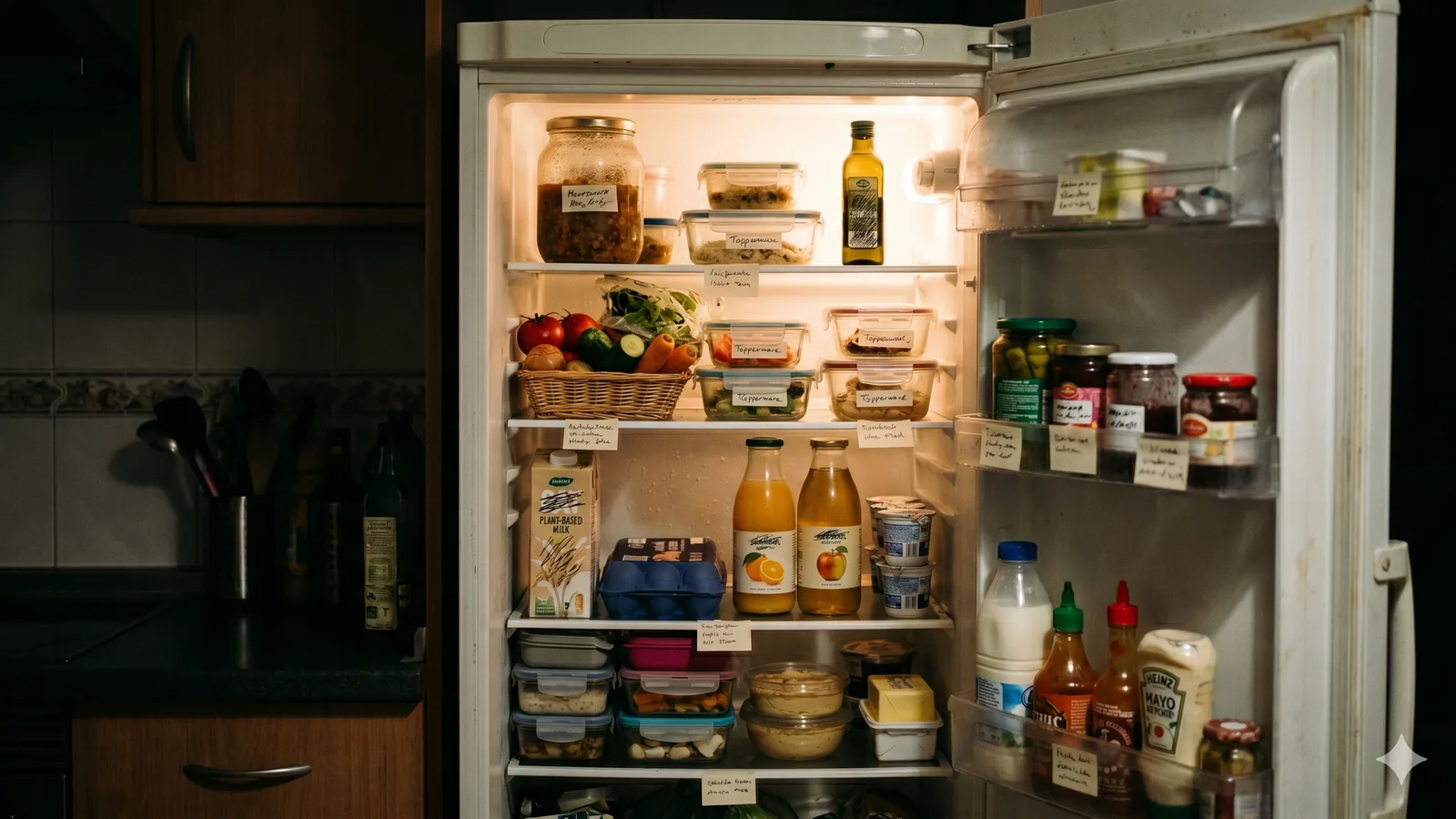
The fridge is the flatshare's least-discussed battlefield
A four-person flat is, statistically, the most complicated dietary ecosystem there is in an urban Spanish home. There's almost always a vegetarian (or vegan), there's almost always an athlete who weighs out the rice and buys oats by the kilo, there's almost always someone who cooks every night with fresh produce, and there's almost always someone else who orders takeout for four out of every seven dinners and only opens the fridge to grab a cold drink. Mixing those four people into a single shopping list and a single common pot is the fastest route to a silent feud.
The feud usually doesn't erupt the first month. It starts around the fourth, when the athlete notices the common pot goes on pasta and canned goods the vegetarian doesn't use, the vegetarian notices they're paying for ground meat they don't eat, the everyday cook notices the takeout person pays the same into the pot but only consumes beers and toilet paper, and the takeout person notices that every time they open the fridge there are three containers that aren't theirs taking up all the room. Four different perceptions, all legitimate, all incompatible with a single undifferentiated pot.
This article is for the flats that have already passed the fourth month and realized the "everything common" model doesn't scale. The good news is you don't have to break friendships. The less good news is you do have to sit down and redesign the system.
Why a single pot doesn't work with four profiles
The single-pot model assumes that consumption of common products is reasonably similar across the tenants. And that's true for an important part: toilet paper, cleaning products, salt, oil, common coffee, that kind of thing. The error is assuming the rest of the basket is too.
It isn't. The grocery-spend difference between someone who cooks every day with fresh produce and someone who cracks open two beers and drinks them is huge. The difference between someone who eats animal protein at every meal and someone who cooks with lentils is also significant. If all that heterogeneity goes into a single pot and gets split four ways, there are cross-subsidies nobody notices the first month and that hurt by the fourth. The real monthly difference between four different profiles can swing between €60 and €140 per person in food consumption, and that's a lot of money over the course of a year.
Three levels of spending, not one
The solution isn't to split the individual stuff; it's to separate three levels that have to live in different categories, with different rules and, ideally, different records.
1. The undifferentiated common (everyone consumes equally)
Toilet paper, cleaning products, cloths, dishwasher tablets, sponges, light bulbs, salt, sugar, common oil, paper towels, aluminum foil, trash bags, common coffee, common tea. This category can indeed go into a common pot with an equal contribution from all four, because consumption is reasonably similar. Realistic estimate: between €25 and €35 per person a month, depending on the size of the flat and the level of kitchen use.
The rule here is simple: fixed monthly contribution, receipt in the drawer, restocking without asking the rest for permission. If someone notices it's getting out of hand (because it turns out the common coffee runs out in five days instead of twelve), you raise the quota or pull the coffee out of the pot and make it individual.
2. The differentiated common (everyone consumes but differently)
The gray zone. Products that are indeed shared but with very unequal consumption: milk (the everyday cook drinks triple what the takeout person does), bread (depends on who has breakfast at home), eggs, seasonal fruit, basic vegetables for side dishes. Here the common pot is unfair.
The formula that works best at this level is the split by percentage of declared consumption. Each tenant estimates their approximate consumption percentage (for example: cook 40%, athlete 30%, vegetarian 25%, takeout 5%) and the products in this category get split that way. It's an uncomfortable negotiation the first three months, but after that it settles and stops being a topic. Applied to the cent by largest remainder instead of by truncation, so nobody always pays the decimal of the rounding.
3. The strictly individual (each one their own)
Meat, fish, specific vegetarian products, sports supplements, personal tins of tuna, snacks, beers, soft drinks, frozen pizzas. Here each one buys what they want and what they don't want doesn't come in. The fridge has assigned shelves (or labeled drawers) and nobody consumes the other's stuff without asking.
The upside: it eliminates 80% of the latent resentment. The "this is mine" rule is brutally clear. The downside: it requires an initial negotiation over the space in the fridge and the cupboards, which is exactly the conversation almost every flat postpones until there are already three containers belonging to one tenant blocking the middle shelf.
The fridge protocol
The fridge of a four-person flat with three levels of consumption needs a map, not a case-by-case negotiation. You assign shelves, you label the drawers, and anything that isn't labeled is assumed to be level 1 or 2 (common). If someone wants to protect something specific, they label it and it goes into level 3.
The best rule I've seen: "if it isn't labeled and it's been in the fridge more than 48 hours, it belongs to whoever needs it." It sounds aggressive, but it prevents waste. And waste in a four-person flat is enormous: between 8% and 15% of grocery spending goes to the trash through forgotten products nobody claimed. In figures, that's between €25 and €50 a month, split. An amount that hurts when you see it all together.
The invisible problem: spontaneous joint dinners
Joint dinners are the use case that breaks any three-level system. On a Friday night, someone says "shall we order pizza between the four of us?" or "I'll make pasta for everyone." If those events slip into the common pot, the system cracks. If you try to split them on the spot, the dinner turns into a banking negotiation.
The reasonable way out is to treat them as a fourth level: a one-off joint expense, logged in the moment ("Friday pizza €35, split among the four") in the common ledger and settled at month-end with the rest. It's the only category where it makes sense for it to be spontaneous, because forcing yourself to plan joint dinners kills exactly the good part of a flatshare.
How to close the system without losing your head
A flat with three levels of spending, four tenants, a mapped fridge and spontaneous joint dinners isn't managed in a WhatsApp group. It takes a system. But, careful, not a baroque system: all you need is a common ledger where the expenses get logged, with their category (undifferentiated common, differentiated common, one-off joint), split automatically with the agreed rules, and a clear month-end balance that says who owes whom and how much.
Any decent tool should allow different categories, different splits by category and a single final balance. ControlarGastos does exactly that, which in a flat of four different profiles isn't a luxury, it's the difference between continuing to live together in peace or entering the phase of passive-aggressive notes on the fridge door.
Living together with different diets isn't a problem, it's a fact
The last thing worth saying, because it often gets forgotten: having a flat with different dietary and consumption profiles isn't a problem of living together. It's a fact of the world in 2026, where half the people sharing a flat have specific dietary preferences, serious athletic habits or a dependence on takeout to survive their workday. What is a problem of living together is pretending that heterogeneity fits into a single common pot and that we'll square up somehow. Once the fact is accepted, the rest is just a matter of setting reasonable rules and keeping them. And, above all, not using the fridge as a complaints board.
Keep reading

One person's pet in a shared flat: who pays the extra?
A dog or a cat brings costs that don't show up in the flat's rent: an extra deposit, occasional damage, hair on the shared sofa. Splitting it well keeps the pet from becoming the living room's silent conflict.

Rounds at the bar with flatmates and friends: a mini-split
The corner bar is the fifth flatmate. How to handle the rounds so nobody ends up paying four times in a row, without turning Friday into a spreadsheet.

Beers at the bar: the phone-calculator ending
Three rounds, eight beers, three plates of patatas bravas, two alcohol-free drinks. The arithmetic at the end can take fifteen minutes or thirty seconds. The difference is in how you model the problem before you order.
Sound familiar?
ControlarGastos automates splitting expenses with your partner, flatmates and friends. Split to the cent, no arguments.
Start for free