Kids' clothing: the real cost and how to split it
Little ones' sizes last three or six months, garments wear out before they're worn out and the wardrobe is a bottomless pit. Looking at the real annual cost helps you budget better and split it sensibly between both parents.

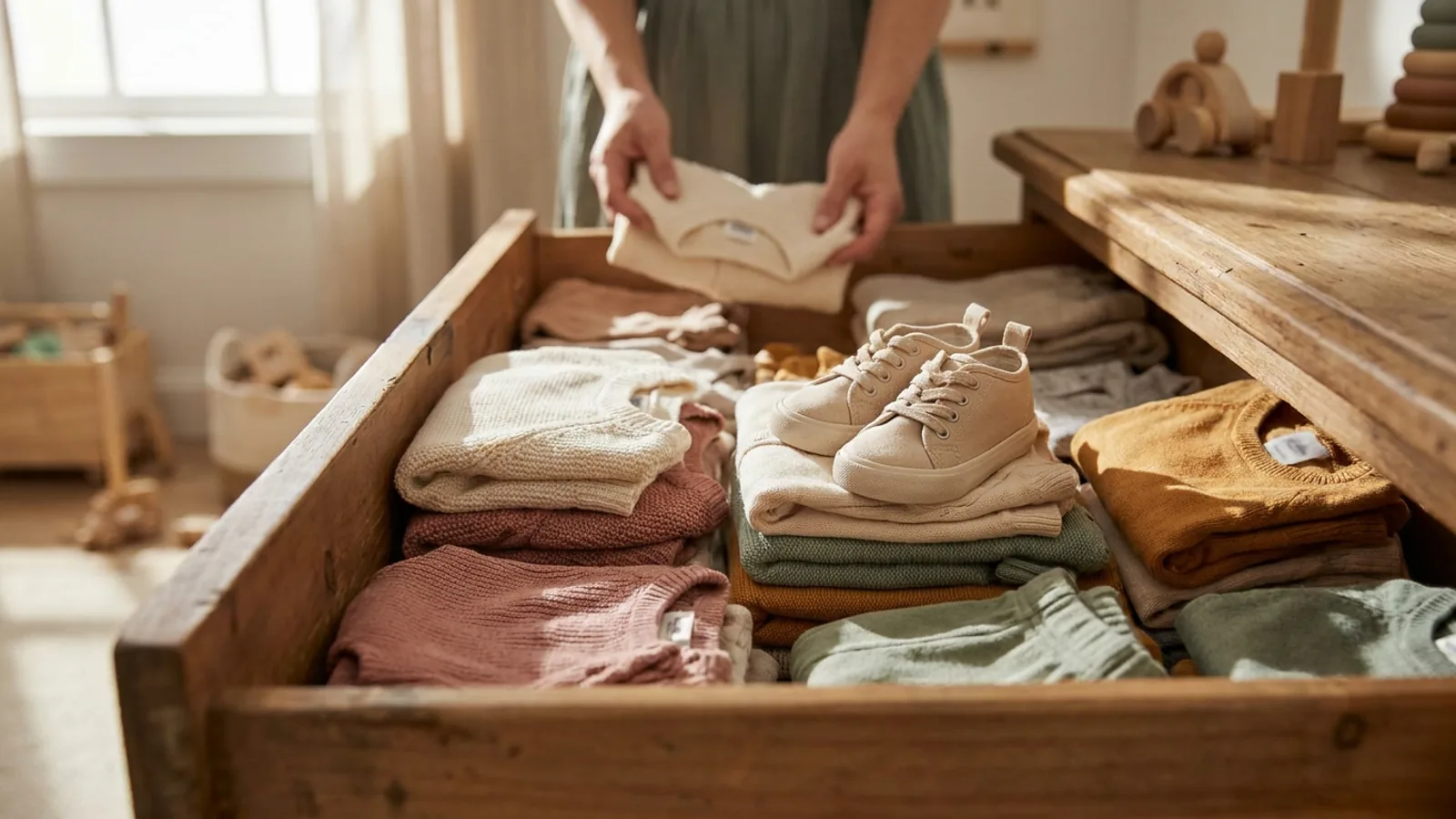
The wardrobe that grows and empties on its own
There's a conversation that repeats in many homes with small children every change of season. One of you opens the little one's T-shirt drawer, checks that last year's short-sleeved ones no longer fit and warns the other: we have to buy clothes again. The line arrives loaded with a certain weariness, because it feels like we bought them just the other day, and because without even opening the online shop you can already sense the short list won't be that short.
It's one of those invisible costs in the family budget: each individual line isn't shocking, but the annual total surprises you. A family with a two-year-old can spend between four hundred and eight hundred euros a year on clothes and shoes alone, depending on whether they buy new or make use of second-hand and family hand-me-downs. With two children of different ages, the figure easily ranges between seven hundred and one thousand five hundred. And the difference between the two extremes isn't set by the brand: it's set by the system.
Why children's clothing breaks the budget
The first reason is physical. A child between zero and three changes size every three to six months. The summer T-shirt you bought in May doesn't fit in September. The winter tracksuit bottoms, if they've grown well, are already too short by February. This means you're amortising each garment over a fraction of the time you amortise your own.
The second reason is use. Children's clothing gets dirtier, stains with things that don't come out on the first wash, tears at the knees and elbows, gets lost at school, gets left at the grandparents'. A T-shirt can last a year in practice even though the size still fits, simply because it went through thirty washes and two heroic stains.
The third is emotional, and it's the one that inflates budgets without our noticing. Buying clothes for a small child produces a small affectionate reward: it looks cute, it delights them, you show it off to the family. That reward means many purchases aren't strictly necessary and, with the inflation accumulated in recent years in textiles, every "this will look great on them" decision starts to cost fifteen or twenty euros.
Three ways to lower the annual cost without losing quality
1. Inherit everything you can
The most efficient model is still the classic one: clothes pass down from an older cousin, a nephew or niece, a family friend. If you have access to an active hand-me-down network, you can dress a child from two to five years old almost entirely in inherited garments, buying new only the shoes, the underwear and a couple of decent jackets.
A well-connected family can cut their annual children's clothing spending by fifty or sixty percent with this alone. And inherited clothing has an added advantage: if it tears or gets lost, it doesn't hurt. The question your decisions rest on stops being "how much does it cost" and becomes "what suits them".
2. Organised second-hand
In big cities, neighbourhood swap groups or local second-hand platforms are now a serious source of children's clothing in good condition at between twenty and forty percent of the new price. A sweatshirt that costs twenty-two euros in store you'll find for four or six euros with a couple of washes of wear.
The key is to buy in batches and by season. Buying eight garments of size ninety-two in May, before summer arrives, works out better than buying one by one over the year. The effort is searching and filtering; the saving is there.
3. Own-brand and mid-season
For the clothing you do buy new (shoes, underwear, serious coats), the own brand of mass-market chains covers most needs at half the price of brands specialising in children's fashion. The real difference in quality is smaller than it seems, especially in garments the child will use for six months.
A trick that works: buy at the end of the season (July for summer, February for winter) in the next size up. A short-sleeved T-shirt at three euros in July, bought in size one hundred for the following summer, is a real saving if you organise yourself to store it. It requires wardrobe space and memory.
The cost nobody counts: shoes
Children's footwear is the line that most easily gets out of control. A pair of decent mid-quality trainers costs between thirty and fifty euros, and an active three-year-old can need two or three pairs a year between wear and size changes. That's between ninety and one hundred and fifty euros on shoes alone, not counting winter boots, summer sandals or the school's specific trainers.
Here second-hand works less well (shoes wear out in a specific stride and inheriting them isn't always a good idea for the child's foot), so the lever is to buy new but well: a brand with a reasonable sole, two sizes that fit right, and accepting that this line isn't going to be dodged.
A realistic annual footwear budget for a child from two to six years old ranges between one hundred and twenty and two hundred and twenty euros, depending on the climate and how much they walk. Keeping it separate from the rest of the wardrobe helps avoid nasty surprises in September.
How to split it between you without it being a spreadsheet
In a couple with a single child, splitting children's clothing is rarely an acute problem: it goes into the shared pot alongside the supermarket and the electricity, and it's just assumed. Friction appears when one of you buys only in physical shops and the other on online platforms; or when one values quality and the other price, and every purchase ends in a micro-conversation about whether it was necessary.
The pragmatic solution is to budget the line. Decide together a quarterly ceiling for children's clothing (for example, one hundred and twenty or one hundred and fifty euros per quarter, shoes aside) and record each purchase against that budget. If March comes and only seventy euros have been spent, the drawer is still full and there's no need to keep buying. If by February the one hundred and fifty have already been spent, it's worth stopping and seeing what's going on.
This is what a tool like ControlarGastos does when used as a system and not as a notebook: each clothing purchase is tagged as "kid's clothes", split automatically fifty-fifty (or in the proportion the couple has agreed by income), and at the end of the quarter both see the real total without having to do the maths by hand. The conversation stops being about each jacket and starts being about the annual pattern.
Conclusion: dressing children without the wardrobe dressing you
Children's clothing is one of those costs you only understand at a year's distance. Month to month it seems small, line by line it seems justifiable, and when you close out the year you discover the total competes with the car insurance or with two months of electricity. Looking at the real annual figure, without guilt but without naivety, is what lets you make different decisions: when to accept the cousin's hand-me-downs, when to buy second-hand without fuss, when to invest in a decent pair of trainers.
Children grow fast and clothing reflects it. What shouldn't grow at the same rate is the feeling that the children's wardrobe has a life of its own and empties the account without permission. With a reasonable budget, an active swap network and a system that measures instead of guessing, dressing a child well stops being a hole in the budget and goes back to being what it should be: a small, routine gesture of caring.
Keep reading

Children's birthdays: the real annual cost
Adding your own child's birthday to the fifteen or twenty other kids' birthdays you attend each year gives you a figure almost nobody looks at. Doing so changes the family conversation and the calendar.

A kid's allowance: shared expense or each parent's own?
When to start the allowance, how much to give and, above all, whether it comes from the shared family pot or each parent chips in their part. A decision that says more about the family than about the child.

Stepfamily children's expenses: one partner's or both?
When one of you comes into the relationship with children from before, the money flowing in and out for them tests unwritten agreements. There's no good formula here, but there are conversations that get avoided for far too long.
Sound familiar?
ControlarGastos automates splitting expenses with your partner, flatmates and friends. Split to the cent, no arguments.
Start for free