Family groceries with two kids: how the split changes
Going from €400 to €700 or €800 a month on groceries when you have two kids isn't just about portions. It changes the basket, the routines and the way the two parents budget together.

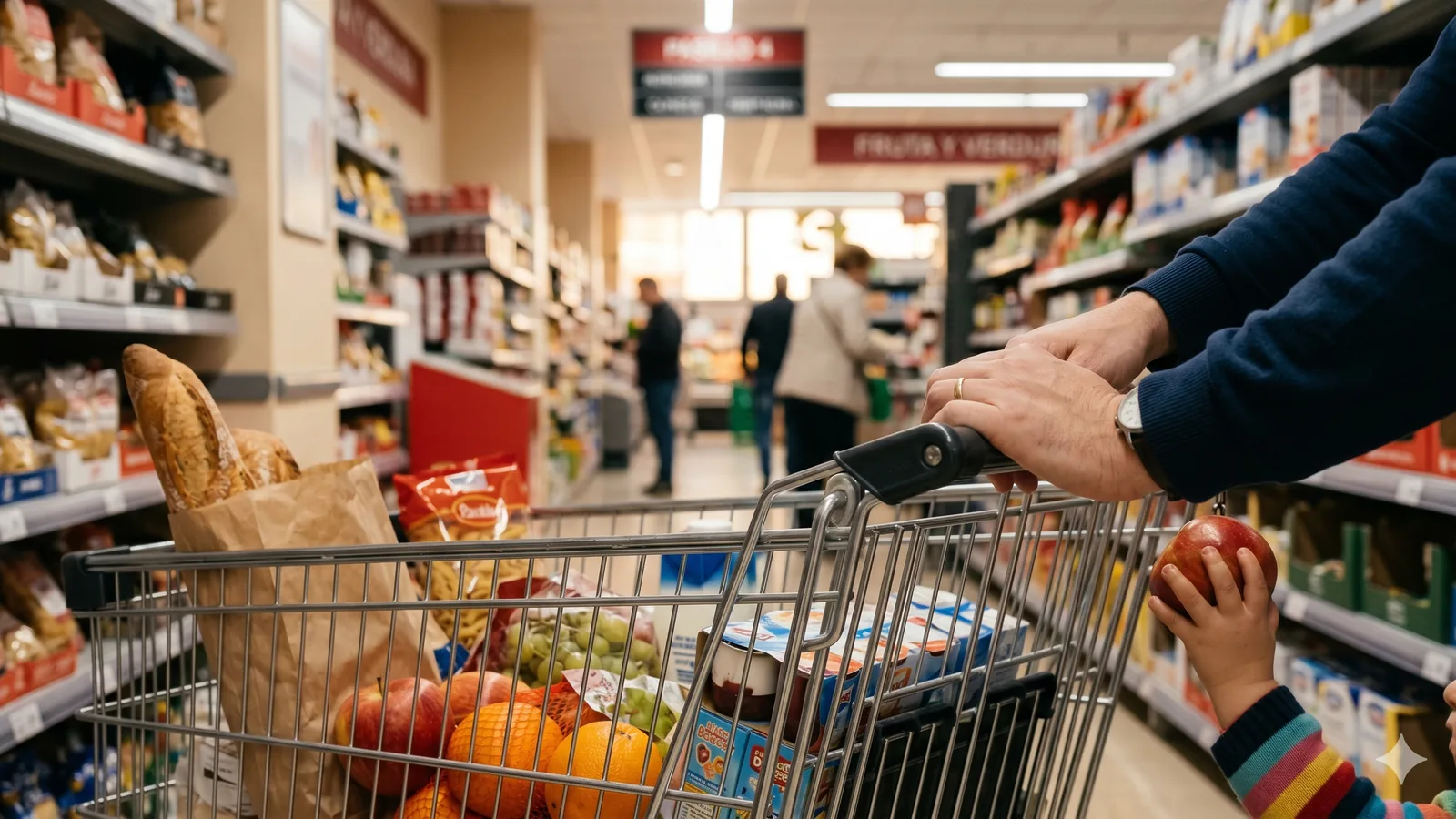
The supermarket stops being a shopping trip and becomes a logistics operation
One of the few certainties any couple with two small kids has, looking at the bank statement on a Sunday night, is that the supermarket receipt no longer looks anything like it did when they were just two. The figure that used to swing between €350 and €450 a month usually settles, by around six or seven years old for the first kid and three or four for the second, into a band of €700 to €800 a month. Sometimes more, depending on the city, the family diet and the seasonal voracity of the kids. Almost never less.
The most interesting part is that this increase isn't linear. Two kids don't eat double what two adults eat —they eat less— but the cart includes a collection of products a childless couple never buys: yogurts with cartoon characters, kids' cereals, packaged snacks for school, pre-cut fruit for break time, diapers in the early phase, wipes in the middle phase, creams, pharmacy products, kids' underwear that shows up three times a year on the grocery list, vitamin supplements, toilet paper at double speed and special milks. The basket changes, not just the receipt.
This article isn't going to tell any family how to raise their kids around consumption. It's going to explain two operational things: how that expense actually breaks down and how to split it between two parents when, often, their incomes aren't equal and their time at home isn't either.
Why the basket gets disordered with two kids
In a childless couple, groceries follow a predictable pattern: a big run every two weeks and two or three weekly top-ups. The basket is relatively homogeneous: fresh food, dairy, pasta, coffee, beers, fruit, vegetables, the odd treat. The expense stays stable month to month with little variance.
With two kids, the pattern fractures. The big run still exists, but three new categories appear: the school shop (snacks, juices, pre-cut fruit, sandwiches, everything that goes in the backpack), the unexpected kids' shop (pharmacy products, an anti-allergy cream, a syrup), and the seasonal shop (sports uniform, footwear, summer-camp gear). Each one has its own logic and its own monthly peak, and none of them looks like the adult basket.
On top of this comes a new variable: time. A childless couple can go to the supermarket twice a week and nothing happens. A family with two kids usually has exactly half an hour free between the after-school activity and dinner, which pushes them toward online shopping or neighborhood shops at odd hours, where prices run 8% to 15% higher. That time-poverty surcharge is real and almost never gets logged in the budget.
Three categories worth budgeting separately
1. The family's base shop
The backbone. Food, dairy, fresh produce, cleaning products, toilet paper, coffee, everything the family would eat whether school is open or closed. In 2026, for a family of four in a mid-sized Spanish city, a realistic estimate for this line is between €480 and €580 a month. A bit more if you prioritize organic or if you live in a high-pressure rental area where supermarkets compete less.
This line has the advantage of being predictable. Once you've established the figure after three months of measuring it, you can budget to the euro and split it between the two parents with whatever formula the couple decides (50/50, proportional to salary, hybrid).
2. The school and after-school shop
The most underestimated line. Snacks, juices, pre-cut fruit, nuts, whole-grain breadsticks, drinkable yogurts, whatever it takes to keep the kids from complaining in the playground. In households with two school-age kids, this line can swing between €80 and €130 a month, adding both together. It rises in September and drops in July, but it never disappears.
It's worth treating as a separate block because it lets you see something important: how much of the grocery increase versus a childless couple comes from here. The answer is usually surprising. In many cases, this line alone explains between 30% and 40% of the jump.
3. The unexpected kids' shop
Pharmacy, drugstore, underwear and socks in ever-changing sizes, backpacks that break, lunchboxes that get lost, a new thermometer, a special bandage. Realistic estimate: between €60 and €110 a month, with peaks at seasonal changes.
It can't be planned in detail, but it can be budgeted as a block. If you set aside the estimated figure each month in a common line, the quiet months offset the months of viruses and growth spurts.
The split between the two parents
Once you know groceries run €700 or €800, comes the uncomfortable question: who pays what? There are three viable models, and the choice depends less on the numbers than on the kind of couple.
The first is the classic 50/50, which works when the two salaries are similar and both parents share the caregiving more or less 50/50. It's symmetrical and simple.
The second is the split proportional to salary, which is fair when there's a strong imbalance (one earns double the other) and both want to keep a similar standard of living. If one provides 65% of the joint income, they pay 65% of the groceries. Important: apply the split to the cents by largest remainder and not by truncation, so nobody always pays the tenth of the rounding and the tally squares exactly between the two.
The third, less talked about, is the split by block: one takes on the base block and the other takes on the kids' block (school + unexpected). It's operationally convenient, especially if one of the parents handles the school matters more and prefers to centralize that category. It carries a risk: if the blocks fall out of balance (a heavy pharmacy month, for example), the split becomes unfair without anyone noticing. It works better with a quarterly review.
The invisible problem: the time and mental load of the shop
There's a cost that doesn't show up on the receipt but weighs all the same: the time and mental load of planning the list, going, unloading and putting things away. In families with two kids, this task often falls on the parent who earns less or works part-time, and it's taken on as "I'll just do that" without being logged. If the other parent compensates by paying more in cash, the split can be fair. If not, there's invisible labor that gets charged later in exhaustion and resentment.
The solution isn't mathematical, it's a conversation: recognizing that the shop has two costs, the monetary and the operational, and consciously deciding how both get split. Sometimes you reach an agreement where one does the base shop and the other takes on the rest of the extra; sometimes you decide to alternate weeks; sometimes you outsource a part (the big online run) so the operational weight drops. What matters is having talked about it.
How to close the tally without losing your mind
A family putting €700 or €800 a month into groceries, split across three categories, managed between two parents with different formulas and reviewed quarterly, can't keep the tally in their head. Nor in a monthly Excel done by hand: it gets abandoned by April. The reasonable thing is for a system to log each expense when it happens (with its category), automatically apply the split the couple has agreed on and show the balances without ambiguity.
Any decent tool should allow custom categories (base / school / unexpected), automatic splitting with the chosen rule and a clear view of the month-end balance. ControlarGastos does exactly that, which turns the month-end conversation into a two-minute errand instead of an uncomfortable session with the calculator.
A conclusion without the moralizing
Groceries aren't managed from guilt or from austerity. A family with two kids in 2026 spends what it spends because raising two people in a Spanish city costs what it costs, and nobody should apologize for it. What you can ask, and should ask, is clarity about what's being spent, what blocks it breaks down into and how it's split between the two. Everything else is mental shortcuts that sooner or later send their invoice.
Keep reading
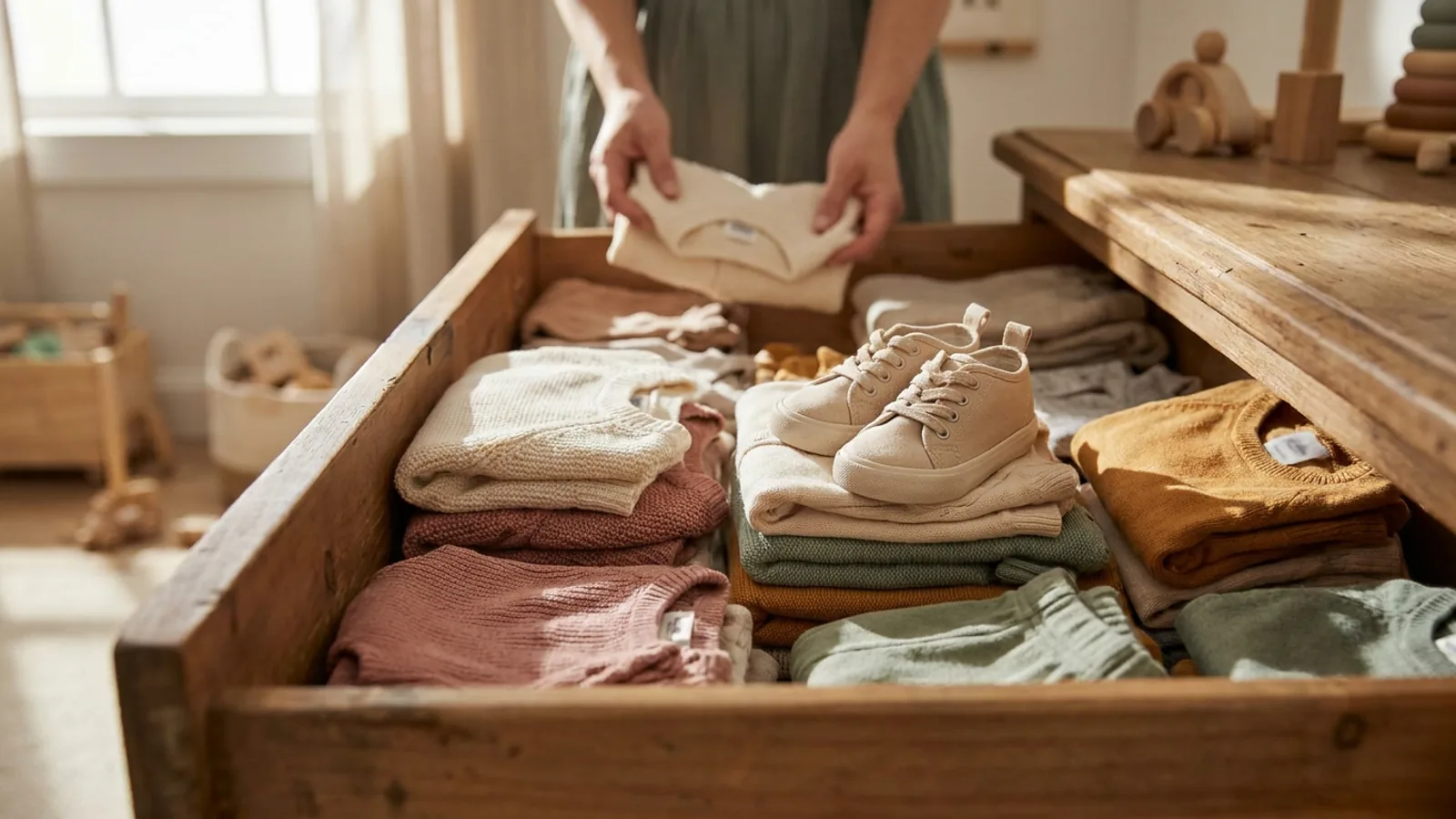
Kids' clothing: the real cost and how to split it
Little ones' sizes last three or six months, garments wear out before they're worn out and the wardrobe is a bottomless pit. Looking at the real annual cost helps you budget better and split it sensibly between both parents.

Children's birthdays: the real annual cost
Adding your own child's birthday to the fifteen or twenty other kids' birthdays you attend each year gives you a figure almost nobody looks at. Doing so changes the family conversation and the calendar.

A kid's allowance: shared expense or each parent's own?
When to start the allowance, how much to give and, above all, whether it comes from the shared family pot or each parent chips in their part. A decision that says more about the family than about the child.
Sound familiar?
ControlarGastos automates splitting expenses with your partner, flatmates and friends. Split to the cent, no arguments.
Start for free