The family car: the payment, the insurance, the servicing, the wear
Buying a 25,000-euro family car isn't 25,000 euros: it's the monthly payment, the insurance, the maintenance, the tyres, the fuel and a parking space. Adding it all up changes the conversation.
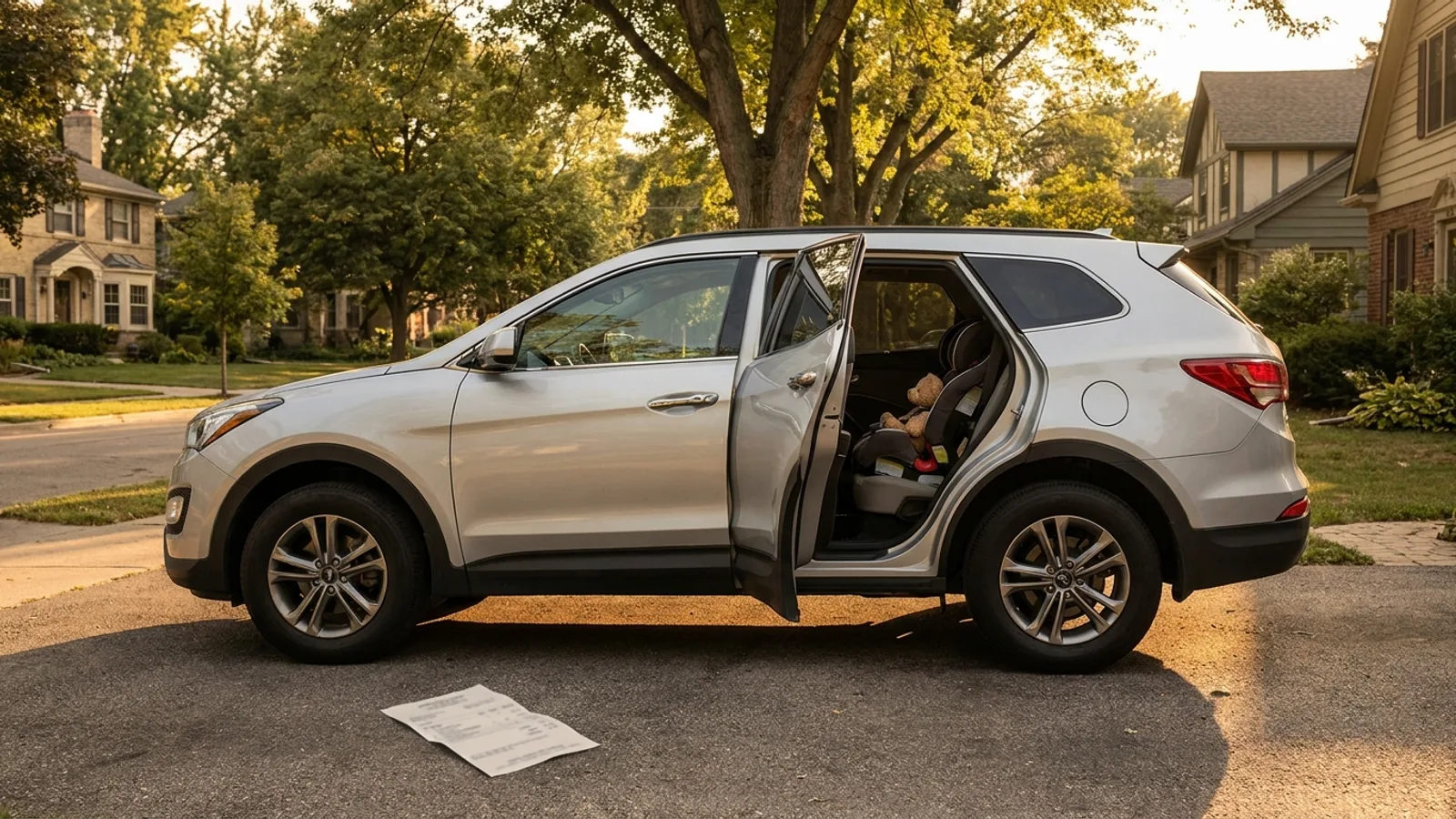
The real cost of the car the family has already decided to buy
A scene that repeats in many families with one or two small children: the current car starts giving trouble, someone mentions the word "family-sized", a couple of models get looked up online and, two Saturdays later, a sixty-month finance deal is signed for around twenty-five thousand euros. The conversation ends there. The monthly payment, around four hundred euros, is absorbed into the household economy as just another fixed expense, alongside the rent or mortgage and the utilities.
What almost never gets put on the table is that the payment is only one part of the car's real monthly cost. The rest is the sum of items paid at different moments of the year, in different amounts, and which are rarely consolidated into a single monthly figure. That figure, when calculated properly, usually doubles the payment. Sometimes more.
This article isn't here to talk you out of buying the car. It's so that, when you do, you do it with your eyes open and with the chance to compare the real monthly cost against alternatives you maybe hadn't considered enough.
Why the family cost of a car is systematically underestimated
The miscalculation arises from how we process expenses: the more infrequent and bulky a payment is, the worse we fit it into the mental monthly account. The finance payment is on direct debit and we see it every month on the statement. The insurance is paid once a year and feels like an annual "jolt", not a recurring cost. The service, the oil change and the tyres show up even further apart.
Fuel is the opposite: many small, frequent payments we don't add up either. And then there's the hidden cost par excellence, depreciation, which isn't paid directly but is charged brutally the day you sell the car and discover it's worth half of what you paid four years ago.
To all of that you have to add, in the current context, the sustained rise in fuel prices stemming from the geopolitical tension in the Middle East in recent years, and the increase in the cost of servicing due to inflation in garages and spare parts. What in 2019 was a reasonable expense today sits on a different scale.
The six real items of the family car
1. The finance payment
A mid-range family vehicle, financed over sixty months with a twenty percent down payment, leaves an approximate monthly payment of between three hundred fifty and four hundred fifty euros, depending on the prevailing interest rate. This is the only thing already visible in the family economy.
2. The fully comprehensive insurance
A fully comprehensive policy with a reasonable excess for a new family car runs between six hundred and nine hundred euros a year, depending on the driver's age, history and area. That is, between fifty and seventy-five euros monthised. If you drop down to enhanced third-party in the fourth or fifth year, that figure can fall by half, but the first few years it's worth keeping it fully comprehensive.
3. Scheduled maintenance and wear
The official annual service, the oil and filter changes, the brake pads every so many kilometres and, above all, the set of tyres every three or four years add up to between four hundred and seven hundred euros a year on average in normal family use. Monthised, that's between thirty and sixty euros. It sounds like little until the year of the tyres arrives and you're hit with six hundred euros all at once.
4. Fuel or electric charging
A family that covers fifteen thousand kilometres a year with a modern combustion car spends, at current prices, between 1,400 and 1,900 euros a year on fuel alone. With an electric one the figure drops, but you have to add home charging if a point has been installed, and above all the night-time electricity cost. In any case, monthised, that's between one hundred twenty and one hundred sixty euros.
5. Parking, tolls and regulated parking
A rented garage space in a capital costs between eighty and one hundred fifty euros a month. If you live in a city with a regulated zone and park on the street, the annual permit can be reasonable, but one-off tickets in other zones add up. Tolls, if you make regular intercity trips, are an item worth budgeting for.
6. Taxes and depreciation
The municipal road tax is modest, between fifty and one hundred twenty euros a year depending on the municipality. Depreciation, by contrast, is not modest: a new car loses between thirty-five and fifty percent of its value in the first four years. If you bought the car for twenty-five thousand and after four years it's worth twelve thousand, you've paid thirteen thousand euros in depreciation alone: two hundred seventy euros monthised.
Adding it up: the honest figure
A realistic estimate for a mid-range family car, bought new, with a garage space and combined urban and intercity use, gives a full monthly cost that ranges between seven hundred and nine hundred euros. The finance payment, the one that's on direct debit and which the family has already taken on board, is less than half.
This figure is important for one specific reason: if we compare it with alternatives (leasing, a three-year-old used car with shorter financing, a smaller model, or even a combination of public transport and a shared car for weekends), the hierarchy changes. Leasing a similar family car can come out at six hundred euros a month with almost everything included except fuel, which in many cases is comparable to or cheaper than buying.
How to organise the family split of this expense
In a couple or a family, the car is one of those expenses rarely split to the cent, but worth having recorded. There are three common models. The first is the single kitty, in which both members contribute to a family fund and all the car's costs come out of it. The second is functional separation: one takes on the payment and the insurance, the other fuel and maintenance. The third, the cleanest, is to log each car item in a family-expense group and let the balances even out at the end of the month.
What the family needs is a system where each car expense, whether the monthly payment or the service that comes every fourteen months, is logged the moment it happens, assigned to the family group and split according to the agreed rule. This is what a tool like ControlarGastos does: it groups all the vehicle's expenses, calculates the real monthised cost and splits the cents by largest remainder, not by truncation, so nobody always pays the rounding. And, above all, it lets you see at a glance how much the car really costs per year.
Conclusion: the car is decided with the full figure
No family should decide whether to buy a car, which car to buy, or whether to finance it, by looking only at the payment. The payment is the comfortable part; the rest of the cost is what decides whether the family economy stays comfortable or stretched. Calculating the full figure once a year, with all the receipts on the table, doesn't turn anyone into a bitter accountant. It turns the family into a unit that knows what it pays and, on that basis, can calmly decide whether to renew, change model, switch to leasing or postpone the purchase a couple more years.
The opposite, looking only at the payment and ignoring the rest, is the most polite way of decapitalising the family budget without realising it.
Keep reading

Medical costs the public system doesn't cover, as a family
Dentist, braces, glasses, physio, child psychology. What the public health system doesn't cover can easily run between 1,500 and 4,000 euros a year for a family. The question is whether insurance pays off or you keep paying à la carte.

Family Holidays: A Realistic Budget for 4 People
Seven days in August on the coast with two adults and two kids don't come to what the brochure says. An honest figure and a method for not reaching July improvising.

A Shared Car as a Couple: Petrol, Insurance, Roadworthiness Tests, Fines
A car shared by a couple is that expense that seems simple and never is. Petrol that almost always the same person pays for, insurance that renews quietly, fines that turn up months later, and depreciation nobody wants to face head-on. Let's open it up slowly.
Sound familiar?
ControlarGastos automates splitting expenses with your partner, flatmates and friends. Split to the cent, no arguments.
Start for free