Extracurricular activities: the hidden cost nobody adds up
English, football, music, swimming. Each activity looks affordable on its own and together they turn into a silent second mortgage. How to decide, with numbers, which ones bring value and which only bring scheduling.

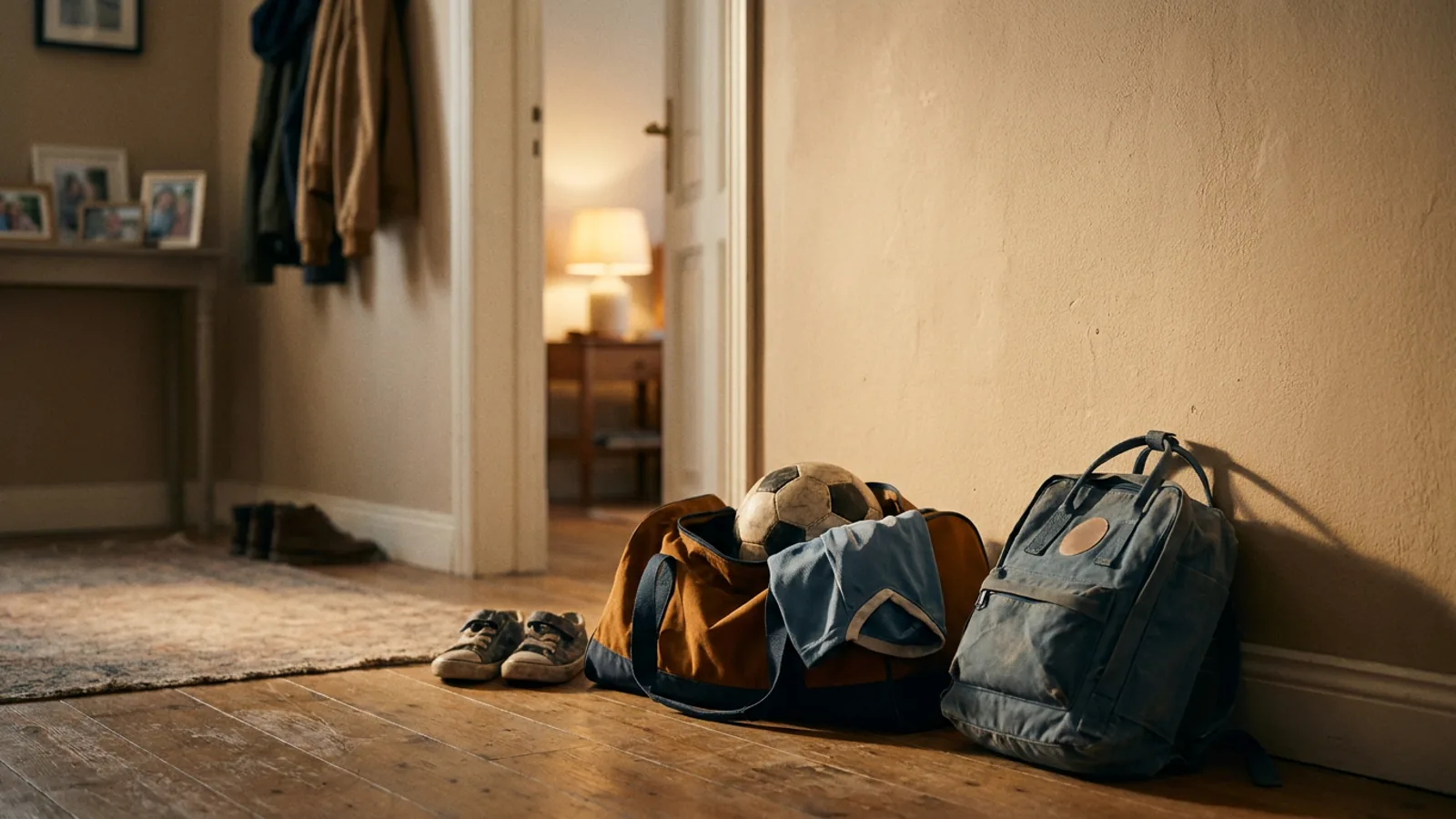
What nobody adds up because it falls into separate columns
Most families with two school-age children know a phenomenon that's hard to explain to anyone who doesn't live it. At the end of September, when extracurricular activity enrolment closes, four or five direct-debit charges of between fifty and ninety euros each get signed off. Separately they seem small, manageable, individual decisions made on the fly. Added together, they make up a fixed monthly line item that in many household budgets exceeds three hundred euros, almost as much as the car insurance or the combined electricity and water bill. And unlike those other expenses, it doesn't show up labelled on any single bill. It falls into separate columns, hits as separate direct debits, and dissolves into the current account.
In 2026, with the cost of private academies and sports clubs growing above inflation for several years running —the premises are more expensive, the instructors charge more, the materials have grown pricier— extracurriculars have become one of the most invisible line items of the family economy. A family with two children doing two activities each is talking, in many Spanish cities, about between two hundred and forty and three hundred and twenty euros a month in fees alone, without counting materials, kit, travel, or one-off events. That's almost four thousand euros a year, a figure many families never verbalise in a single budget line.
This article isn't proposing to cut them all. It's proposing to see them. Once seen, each family decides.
Why the current decision isn't really a decision
The usual model for choosing extracurriculars isn't a decision, it's a succession of inertias. The first extracurricular tends to come in by mimicry: most of a child's classmates do English, so they sign up for English. The second comes in because the child is excited about football after a school tournament, and the parents don't want to cut off that enthusiasm. The third, because grandma considers music important and offers to pay for it the first few months, until grandma gets tired and the fee stays with the family. The fourth comes in because the second child can't fall behind the first. None of these reasons is bad in itself. The problem is that at no point in that chain is a joint evaluation made of the total cost or of each activity's real usefulness.
The result is predictable. The family reaches February with all the extracurriculars active, an impossible schedule on Wednesdays and Fridays, two tired children, parents acting as chauffeurs, and a vague sense that something doesn't add up. The conversation about cutting back starts in April and gets postponed until June, when it no longer matters because the school year is ending. In September the same four extracurriculars get signed up for again, and the cycle repeats.
How to put the decision on the table with numbers
1. The forgotten column: real cost, not nominal cost
The monthly fee of an extracurricular isn't its real cost. You have to add the materials —tracksuits, instruments, books, racquets—, the kit that gets renewed at least once a year because the child grows, the travel if the activity isn't at the school, the events —matches, concerts, exhibitions— that usually carry extra fees and, in some cases, the private tutoring for reinforcement when the child gets stuck.
An activity advertised as "sixty euros a month" can have a real cost of ninety once all the items are included. In the decision to continue or cut, that nominal sixty is a misleading figure. The honest exercise is to take the twelve months, add up the fees, subtract the months with no activity —August, usually—, add all the associated costs from the previous year, and divide by the active months. That gives the real monthly cost, which tends to be between twenty and forty per cent higher than the nominal one. Doing this exercise once a year, ideally in May, before making the September decision, is one of the most worthwhile acts of family financial hygiene there is.
2. The usefulness criterion: what you're after with each activity
Not all extracurriculars pursue the same thing, but the family rarely verbalises it. Some are done out of academic need —reinforcement in maths, a language the school doesn't cover well—, others for psychomotor development —swimming, team sports—, others purely for childcare logistics —the child has to be somewhere between five and seven because both parents work— and others out of aspiration —music, drawing, robotics.
Identifying the real motive of each activity lets you assess it on its own. A forty-euro-a-month childcare extracurricular is reasonable; a ninety-euro aspirational one the child doesn't particularly enjoy isn't. When the two criteria get mixed together without naming them, they're assessed as if they were the same, and the wrong ones get cut. The useful conversation within the parental couple is to ask, one by one: what would happen if this specific activity ceased to exist next year? If the answer is "nothing important happens", it can probably be cut. If the answer is "the child would lose something they genuinely value" or "our childcare logistics fall apart", it stays.
3. The family budget for extracurriculars as an explicit figure
The families that handle these decisions best tend to have formalised them: there's an annual ceiling on extracurricular spending, known to both parents and, for children over twelve, transparent to the children. For example, one hundred and eighty euros a month total for the two children, adding up all the activities. That figure forces prioritisation, and prioritisation is the only way to avoid the inertia.
It's also useful to define what happens with the extra expenses: if an activity exceeds the budget during the year because of new kit or a championship, it gets discussed, not silently direct-debited. This discipline seems harsh, but it protects the family from the alternative, which is gradually discovering at year-end that the extracurriculars have eaten up the savings earmarked for holidays.
The invisible cost of time
There's a chapter that doesn't appear on any bill and that weighs the same or more than the money: the parents' time. Taking a child to football on Tuesdays and Thursdays at half past five means, each week, two and a half hours of an adult's time between travel, waiting, and the trip back. Over a school year, that's around eighty hours of a father or a mother dedicated exclusively to that activity. Multiplied by two children and two activities, that's three hundred and twenty hours a year. Two full working months.
There's no way to monetise that time without falling into cynicism, but there is a way to take it into account when choosing. An activity that takes place at the school itself or that's next to home is, for that very reason, much cheaper than an equivalent one across the city, even if the monthly fee is identical. This variable rarely enters the initial decision and tends to explain why some activities are experienced with resentment even when they're working well.
How to close it out in the family economy
The decision of which activity each child keeps can't be delegated: it's strictly parental. But the operational side —tracking the real cost month by month, seeing the combined weight of the four or five extracurriculars, splitting between the two parents if the finances are separate— can be automated. Any decent system should let you tag each expense, see the aggregate by category, and split it between the members of the couple according to the chosen model. ControlarGastos does exactly that, and it splits the cents by largest remainder, not by truncation, so nobody always pays the rounding.
What matters about that visibility isn't saving twenty euros a month by cutting an activity: it's making the decision with data on screen instead of with feelings. When the parental couple sees, in a single line, that the extracurriculars weigh three hundred and ten euros a month, the conversation changes tone. It's no longer an argument about whether to cut a specific activity, it's a negotiation about family priorities.
Conclusion: what children learn when their parents look at the accounts
There's an idea worth closing on. Extracurricular activities are, for many children, their first contact with the notion that things cost money and that parents decide what to invest it in. When that decision is made with explicit criteria —this activity is prioritised because it brings this, that other one is dropped because it isn't worth it— the child learns something that isn't taught in class: that financial choices are real, that they have consequences, and that talking about money in the family is normal.
The hidden cost of extracurriculars, then, isn't only the money that escapes the budget. It's the missed opportunity to turn them into a grown-up conversation, instead of one more bill paid without looking. The families that seize that opportunity tend to be the same ones that end up doing fewer activities and enjoying them more.
Keep reading

Kids' clothing: the real cost and how to split it
Little ones' sizes last three or six months, garments wear out before they're worn out and the wardrobe is a bottomless pit. Looking at the real annual cost helps you budget better and split it sensibly between both parents.

Children's birthdays: the real annual cost
Adding your own child's birthday to the fifteen or twenty other kids' birthdays you attend each year gives you a figure almost nobody looks at. Doing so changes the family conversation and the calendar.

A kid's allowance: shared expense or each parent's own?
When to start the allowance, how much to give and, above all, whether it comes from the shared family pot or each parent chips in their part. A decision that says more about the family than about the child.
Sound familiar?
ControlarGastos automates splitting expenses with your partner, flatmates and friends. Split to the cent, no arguments.
Start for free