A couple's pet: food, vet, grooming — who pays for what?
Adopting a dog or a cat as a couple seems like a sentimental decision, but it opens a whole chapter in the household economy. And in the event of a breakup, it also opens a legal one.

The conversation that gets postponed until the first vet bill
There are two ways to bring a pet into a couple's life, and both have different economic consequences. One is joint adoption: the couple decides together, goes together to the shelter or the breeder, signs the papers together and brings the animal into a flat they already consider shared. The other is the inherited pet: one of the two arrived at the relationship with a dog or a cat, and the animal enters the shared flat as part of the initial package.
Both situations are legitimate and common, but their economic treatment isn't the same. And what almost never gets discussed at the start, because it sounds unromantic, is what happens with the animal's expenses in the short, medium and very long term. The conversation gets postponed, generally, until the moment the first unexpected vet bill arrives and someone leaves it, in silence, on the kitchen table.
The cost of having a medium-sized dog in Spain runs, under normal conditions, between ninety and one hundred sixty euros a month, all included. For a cat, between forty and ninety. This without factoring in emergencies. A surgical procedure of some significance can easily run to one thousand five hundred or two thousand five hundred euros in a single afternoon.
Why splitting the pet grates in a couple
The problem with pet expenses is that they're hybrid: one part is regular and predictable (food, litter, monthly antiparasitics, periodic grooming) and the other is irregular and sometimes brutal (a vet emergency, a chronic treatment, boarding for the holidays). Applying the same splitting model to both categories without thinking generates friction.
To this you add an emotional asymmetry. In many couples the bond with the animal isn't exactly equally intense for both. Not for lack of affection, but because one tends to be the primary carer: the one who takes the dog to the vet, who remembers when the flea treatment is due, who arranges the grooming. That asymmetry of care translates, almost always, into an asymmetry of spending decisions, and that in turn generates the awkward question: if I make eighty percent of the decisions, is it fair that I pay fifty percent of the expenses?
The sensible answer is that yes, it is, as long as it's understood that care is a non-monetary contribution recognised in other ways, but reaching that answer requires having talked about it.
Three splitting models that work in practice
1. The full co-adoption model
It applies to couples who adopt together and consider the animal a shared responsibility from day one. All expenses, regular and extraordinary, are split fifty-fifty. Decision-making is also shared: no expensive treatment is approved without consulting the other. It's the cleanest model for couples with already-integrated finances.
An example: an average monthly bill of one hundred twenty euros between the two gives sixty per head. When the one thousand eight hundred euro emergency arrives, it's nine hundred each. Taken on from the start, there's no surprise.
2. The inherited-pet-with-compensation model
It applies when the animal arrived with one of the two. The starting premise is that the original owner remains the principal economic responsible party, but, once the couple lives together, part of the expense is split. A common formula is that the original owner takes on the extraordinary expenses (operations, chronic treatments stemming from conditions prior to living together) and the couple splits the running expenses fifty-fifty (food, litter, grooming, antiparasitics) because the animal lives in the shared space and is part of both their dynamic.
The advantage is that it acknowledges the prior history without falling into "it's your dog, you pay for everything". The drawback is that it requires drawing a clear line between what's running and what's extraordinary, and that line isn't always sharp.
3. The common-kitty-with-usage-criterion model
It applies especially well in cases where the pet lives with different profiles. The couple creates a fixed monthly fund dedicated to the animal (say, one hundred twenty euros between the two), out of which all the regular expenses come. The extraordinary expenses are discussed case by case. The beauty of the model is that it limits the monthly discussion: if the fund covers it, there's nothing to talk about; you only talk when something outside the fund comes up.
The problem of the vet emergency
It deserves its own paragraph. A serious vet emergency is one of the few household expenses that can, within hours, break the month's budget and force an emotional decision under pressure. Any couple with an animal should have had this conversation once, in cold blood, before it arrives: what's the joint ceiling they're willing to take on, which treatments are approved automatically and which are discussed, and where the money comes from if the figure exceeds what was foreseen.
There's no need to turn it into a protocol: a twenty-minute conversation is enough. But that prior conversation keeps the decision about the animal, in the emergency vet's waiting room at two in the morning, from being contaminated by the decision about who pays.
The question nobody wants to ask: the breakup
Couples' pets, especially those adopted jointly, are no longer legally "things" in many European jurisdictions: they have an intermediate status, close to that of a minor for custody purposes. This doesn't resolve the post-breakup economic question, which remains grey territory.
What couples who adopt can do is put down in writing, without solemnity, two things: who the animal stays with in the event of separation and how extraordinary expenses are split during a transition period. It isn't necessarily an enforceable contract, but it's a reference point that avoids conflicts when the separation is already painful in itself. You write it once in a shared note and forget it exists. If nothing happens, it's never used. If it does, it's worth gold.
How to automate the split without bitter accounting
The animal's expenses are perfect for an automatic recording system: there are many small ones (monthly food, litter, antiparasitics), some medium ones (quarterly grooming, the annual check-up) and every now and then a big one. Keeping them by hand in a spreadsheet works for two months; by the third it's no longer updated.
What you need, at a minimum, is a system where each of the animal's expenses is logged at the moment, assigned to the couple as a group and split according to the rule you've agreed on, leaving a clear balance at the end of the month. This is what a tool like ControlarGastos does: you log the vet bill or the bag of food, decide whether it's split fifty-fifty or assigned to one person, and it splits the cents by largest remainder, not by truncation, so nobody always pays the rounding. The economic side stops taking up mental space and goes back to being what it should be: an invisible support for the animal's care, not a source of tension.
Conclusion: the animal is loved, the numbers are agreed
The relationship with a dog or a cat is one of the cleanest relationships you can have: it doesn't calculate, it doesn't negotiate, it doesn't take offence when you get home late. The paradox is that, around such a clean relationship, couples tend to accumulate economic tensions that have nothing to do with the animal and everything to do with having dodged a fifteen-minute conversation at the right moment.
The couples who best manage pet expenses aren't the ones who love the animal the most. They're the ones who talked about money before money talked for them.
Keep reading

Shared streaming subscriptions: the silent splitting mess
An average couple racks up between five and seven streaming subscriptions. Almost none is in both their names, almost none is split properly and yet they're all paid religiously every month.
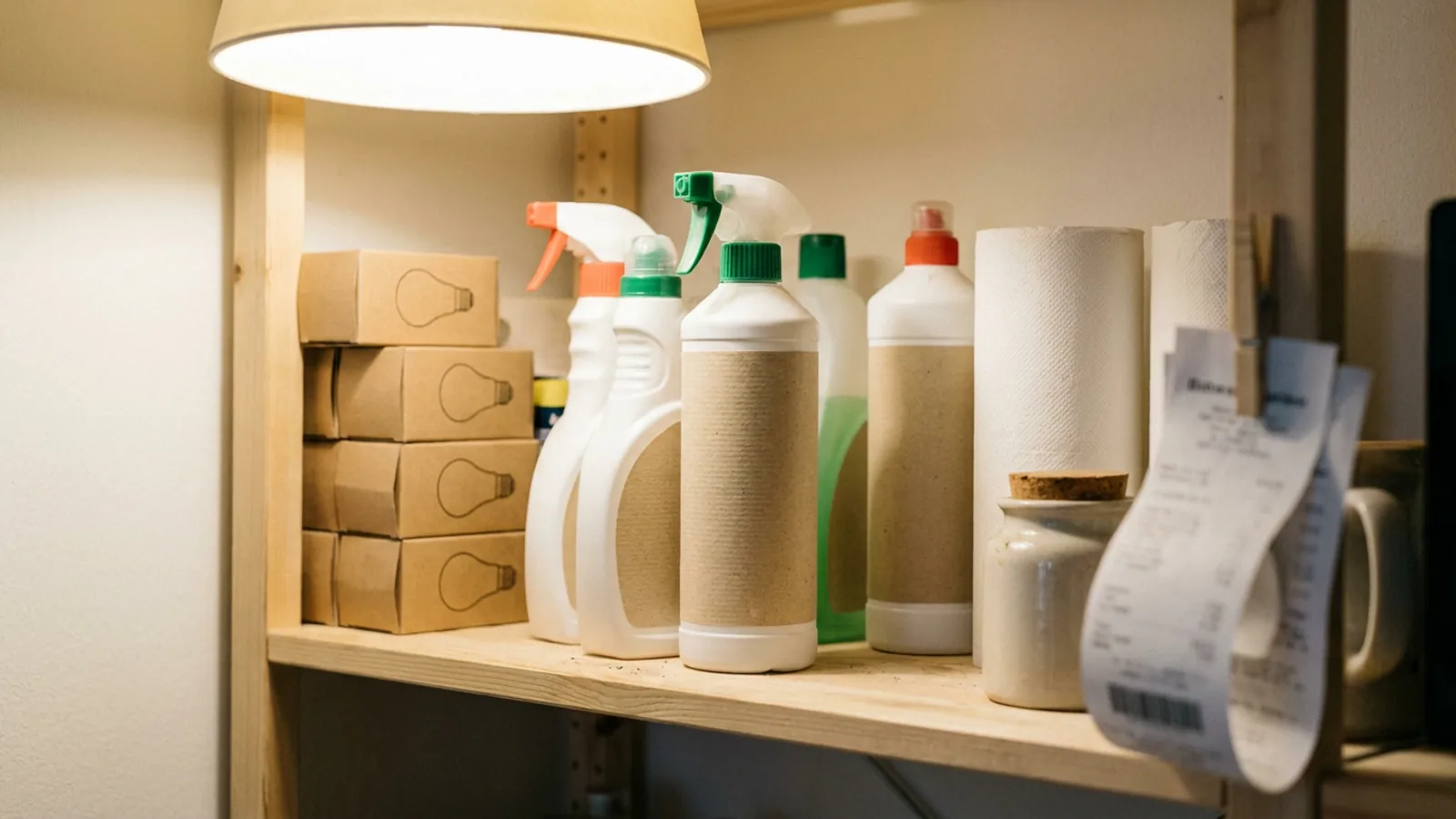
Light bulbs, toilet paper, dish soap: the flat's medicine cabinet
The small invisible expenses of a shared flat add up to more than they seem. Light bulbs, toilet paper, cleaning products, salt. Why the expense app doesn't capture them and how to organise them without becoming the living-room accountant.

Online vs in-store grocery shopping: how it affects the split
Online leaves a single, traceable, welcome receipt. In-store crumbles into six small trips nobody writes down. For a couple splitting costs, that difference isn't cosmetic: it's real accounting.
Sound familiar?
ControlarGastos automates splitting expenses with your partner, flatmates and friends. Split to the cent, no arguments.
Start for free