Splitting Steam bundles and group purchases between friends
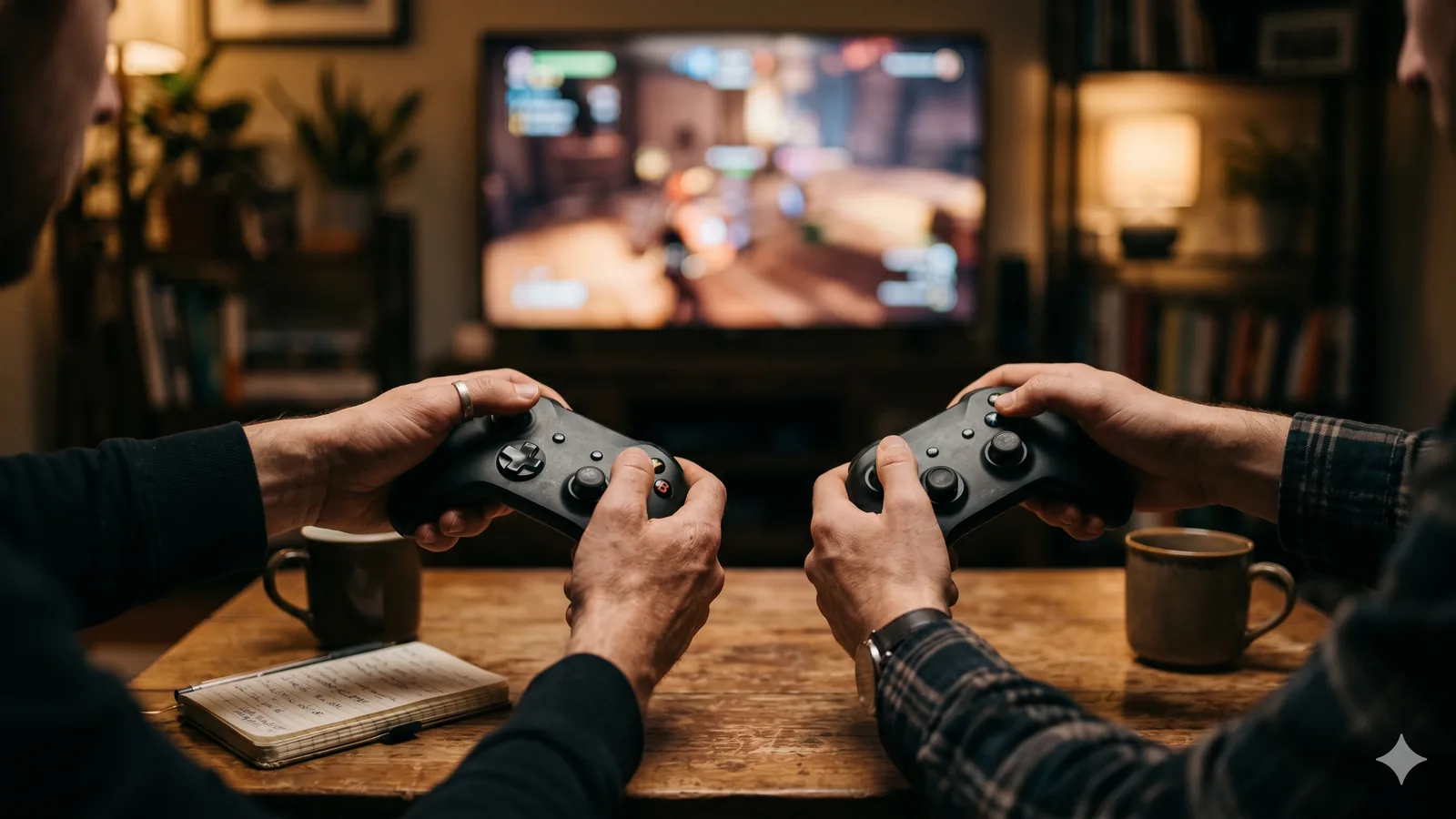
Buying a game bundle together seems simple until it's time to divide it up. Four friends, twelve keys, a single payment and official prices that don't add up. Here's how to split it without anyone feeling they've come off worse.

Quick answer
Splitting a bundle equally is only fair if everyone takes similar value. The clean method is splitting by catalogue value: each pays the share their games represent of the full standalone price. In a 14.99-euro bundle, whoever takes 49% pays 7.39.
When a cheap bundle ends up costing an argument
Digital distribution platforms have spent a decade perfecting an old trick: packaging ten games for the price of two and selling the sense of a bargain. It works. What they haven't perfected is the social logic that comes afterwards when a group of four friends decides to grab the bundle together and then split the keys. That's where the twelve-euro deal ends up turning into two hours of spreadsheet, a couple of passive-aggressive messages and, if you're lucky, someone saying "just pay whatever, we'll sort it out".
The problem isn't the money. Twelve or fifteen euros between four won't ruin anyone. The problem is that the bundle contains games with very different catalogue prices, none of the four wants every game equally, and the equal split starts to feel unfair the moment someone does the maths. If one walks off with the forty-euro AAA title and another with the six-euro indie, paying the same stops making sense.
On top of this there's a layer almost nobody quantifies: the gifted keys, the duplicates, the cross-redemptions and the inevitable "I'm never going to touch that game, give it to whoever wants it". Without a clear method, all of that stays in the head of the original buyer, and months later nobody remembers who owed what.
Why a per-head split almost never works here
Intuition suggests dividing the cost of the bundle by the number of people who make use of it, and that's that. The problem is that a bundle isn't a tasting menu: each person takes a different dish. Four friends paying the same when one walks off with three games that would cost seventy euros on the market and another with a single one costing twelve isn't fair, it's convenient. Convenience comes free the first two times; by the third, the person who always gets the small portion stops being keen.
There's another, less visible factor. Bundles include titles you already own. If the platform lets you gift the duplicate key, that key has market value, it's not waste. Treating it as such changes the maths. If you gift it within the group, someone receives an asset that the whole group partly paid for.
Three splitting methods that do fit
1. Splitting by the catalogue value of each assigned game
This is the cleanest method when each member of the group ends up with a different subset of the bundle. You note the official price of each game in the store at the time of purchase. You add up the total price "as if we bought them separately" and work out what percentage each game represents. Each person pays their percentage of the bundle's actual cost.
A plausible example: a twelve-game bundle for 14.99 euros. Adding up the separate prices comes to 142 euros. If one of the four keeps games that would add up to 70 euros separately, they pay 49.3 per cent of the 14.99, or about 7.39 euros. The one who keeps games adding up to 18 euros pays 12.6 per cent, around 1.89. The proportion is the same as the discount each one is getting, so nobody is left feeling they subsidised the person next to them.
It's more work, yes. But only the first time. After that it's copying the formula.
2. Equal split with duplicate compensation
This works when the four have a reasonably even interest in the bundle's games and nobody is going to walk off with one that's clearly out of proportion. You pay in equal parts and, when a duplicate appears, that key is raffled off or assigned to whoever has the fewest games allocated, adjusting the split at the end with micro-payments.
The key here is not to treat duplicates as a gift from the universe. If the duplicate key sells on resale platforms for six euros, the group has just generated six euros of value that it has to split. If you gift it to a fifth friend outside the group, the cost of that generosity is split among the four, not borne solely by whoever made the original payment.
3. Rotating purchases with a running balance
An underused strategy. If the group buys bundles every few months, instead of settling to the cent each time you rotate the buyer and keep a shared balance. Month one, one person pays; month two, another; at the end of the year you close the accounts. The idea is that the noise dilutes over time and the imbalances even themselves out, as long as the contributions are comparable.
It only works if the group is stable and everyone trusts each other to close the year without creative accounting. If people come and go, this method breaks.
The problem of crossed gifts
There's one scenario rarely discussed up front and almost always a source of friction afterwards: gifts. One of the group says "that key's a gift from me, I don't need it". It sounds generous. For splitting purposes it may not be. If that key was counted within the proportional calculation of the first method, gifting it afterwards means the recipient is receiving a game the group already partly paid for. It's worth clarifying the exact moment the gift takes effect: if it's before calculating the split, the game comes out of the calculation; if it's after, it's a personal gift from whoever makes it and nobody owes anything.
The same logic applies to DLC, expansions and purchases made afterwards on a shared family or platform account. A streaming game subscription shared between four has the same anatomy: you have to decide whether to split it by months, by hours played or by number of games enjoyed. There's no universal method; there's an explicit method or an implicit, badly handled one.
How to automate it without losing your mind
By hand, with any of the three methods, it works. What doesn't scale is repeating the calculation every couple of months when another bundle, another pack and another annual subscription turn up. Any decent system for this should let you create a persistent group, log the purchase once with detail on who gets what, calculate the proportional split and leave the balance open for future settlements. ControlarGastos does exactly that, and it splits the cents by largest remainder, not by truncation, so nobody always ends up paying the extra rounding on whatever bundle it is this time.
The important gesture isn't the tool, it's the discipline of logging it in the moment. A bundle bought on Friday night and not noted down until Tuesday already starts losing details: which game each person chose, whether the forty-euro one was taken by the one who claims it or the other, whether the duplicate key ever got gifted. With a fresh record, any split closes out in thirty seconds. From memory, in an hour and with a mini-argument.
Conclusion: the bundle is a maturity test for the group
A Steam bundle shared between friends looks like a minor transaction, but it condenses the same thing as a shared tenancy or a trip: people with different preferences deciding to cooperate to access a discount. If the splitting method is honest and explicit, the group gets a net benefit and the feeling of having done it right. If it's lazy or asymmetric, the cheap bundle becomes the grain of sand that, year after year, leaves someone always putting in more without realising.
It's worth stopping for five minutes and choosing a method at the start, before the first bundle. What you gain isn't money, it's the conversation you don't have to have.
Frequently asked questions
How do you split the price of a bundle when everyone keeps different games?
By catalogue value. Note the standalone price of each game on the day of purchase, add them up and work out each share. A 14.99-euro bundle worth 142 in standalone prices: whoever keeps 70 euros worth pays 49.3%, that is 7.39 euros.
What do you do with duplicate keys from a bundle?
Treat them as value, not as leftovers. If the spare key sells for six euros, the group has just created six euros to share out. If it goes to someone outside the group, the cost of that generosity is shared too, not absorbed by whoever paid.
When does an equal split actually work?
When all four have a similar interest in the games and nobody walks away with something clearly disproportionate. You pay equally and duplicates go to whoever has fewest games, settling up at the end with small payments. If one takes the 40-euro AAA and another the 6-euro indie, it stops working.
What if someone gives their key to another person in the group?
It depends when. If the gift is agreed before the split is calculated, that game leaves the calculation and nobody pays for it. If it is agreed after the group has already part-paid for it, it is a personal gift from whoever makes it and creates no debt.
Keep reading

Beers at the bar: the phone-calculator ending
Three rounds, eight beers, three plates of patatas bravas, two alcohol-free drinks. The arithmetic at the end can take fifteen minutes or thirty seconds. The difference is in how you model the problem before you order.
The friend who always pays less: bring it up or stay quiet?
In every group there's one who orders the cheapest thing, leaves early or pays the bare minimum. How to spot the pattern, when it's worth bringing up and when it's better to accept it as system noise.

Concerts and Festivals: Tickets + Parking + Beers
A three-day festival isn't 200 euros, it's 600. How to budget a weekend with friends four months ahead so nobody drops out in July by surprise.
Sound familiar?
ControlarGastos automates splitting expenses with your partner, flatmates and friends. Split to the cent, no arguments.
Start for free